Viking VCSB483SS: Compressor & Inverter Board Failure in League City, TX
📞 Call (346) 512-3688🔧 Performed by Alex
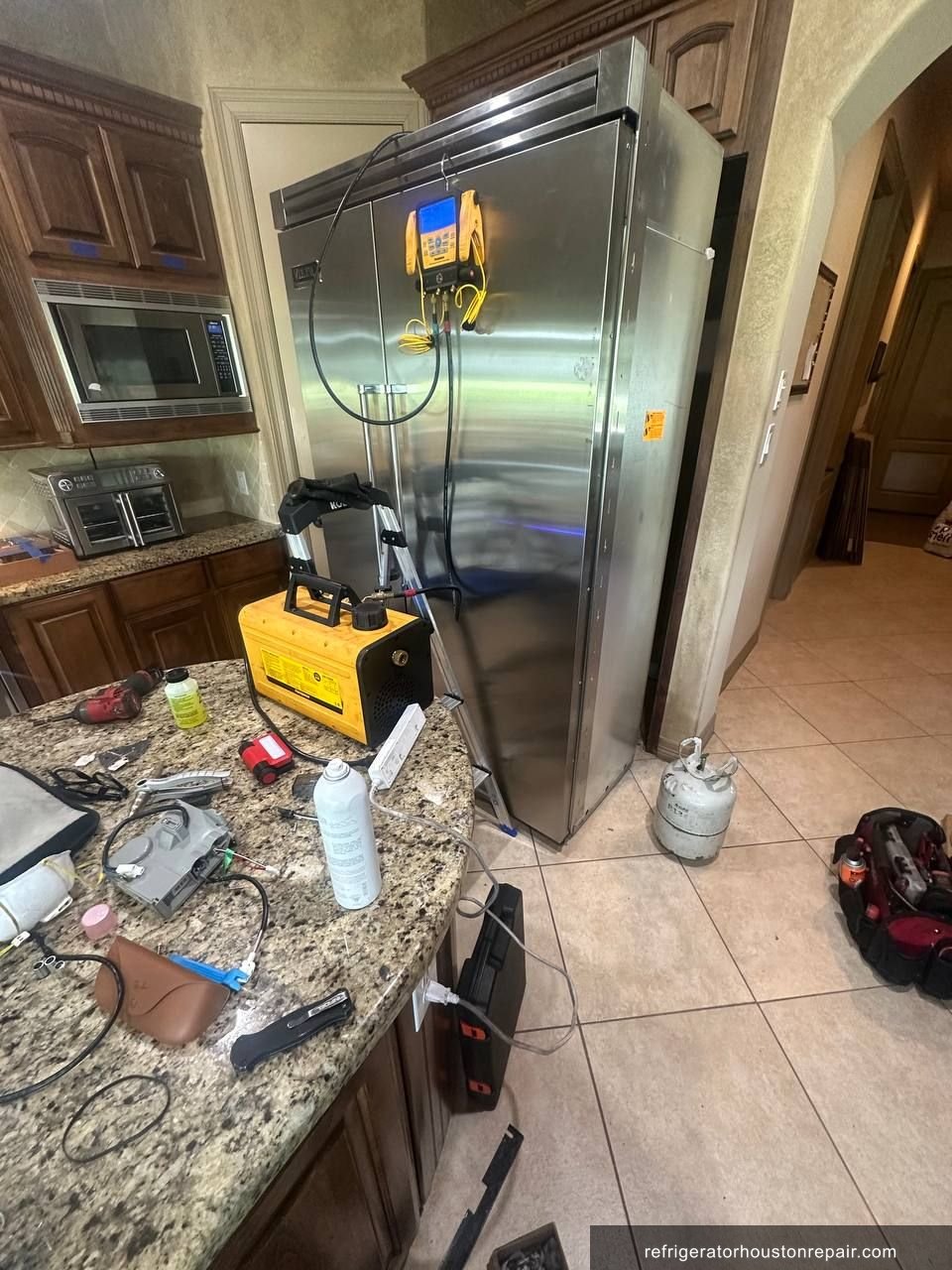
The Problem
- •Refrigerator completely stopped cooling — both fresh food and freezer compartments at ambient room temperature (~78°F)
- •Compressor clicking on and attempting to start but failing to run — audible relay chatter with no sustained operation
- •No cold air circulation from any vent; evaporator fan running but moving unconditioned air
- •Interior temperatures climbing to match Houston ambient — food spoilage within 24 hours of failure onset
🔍 Diagnosis
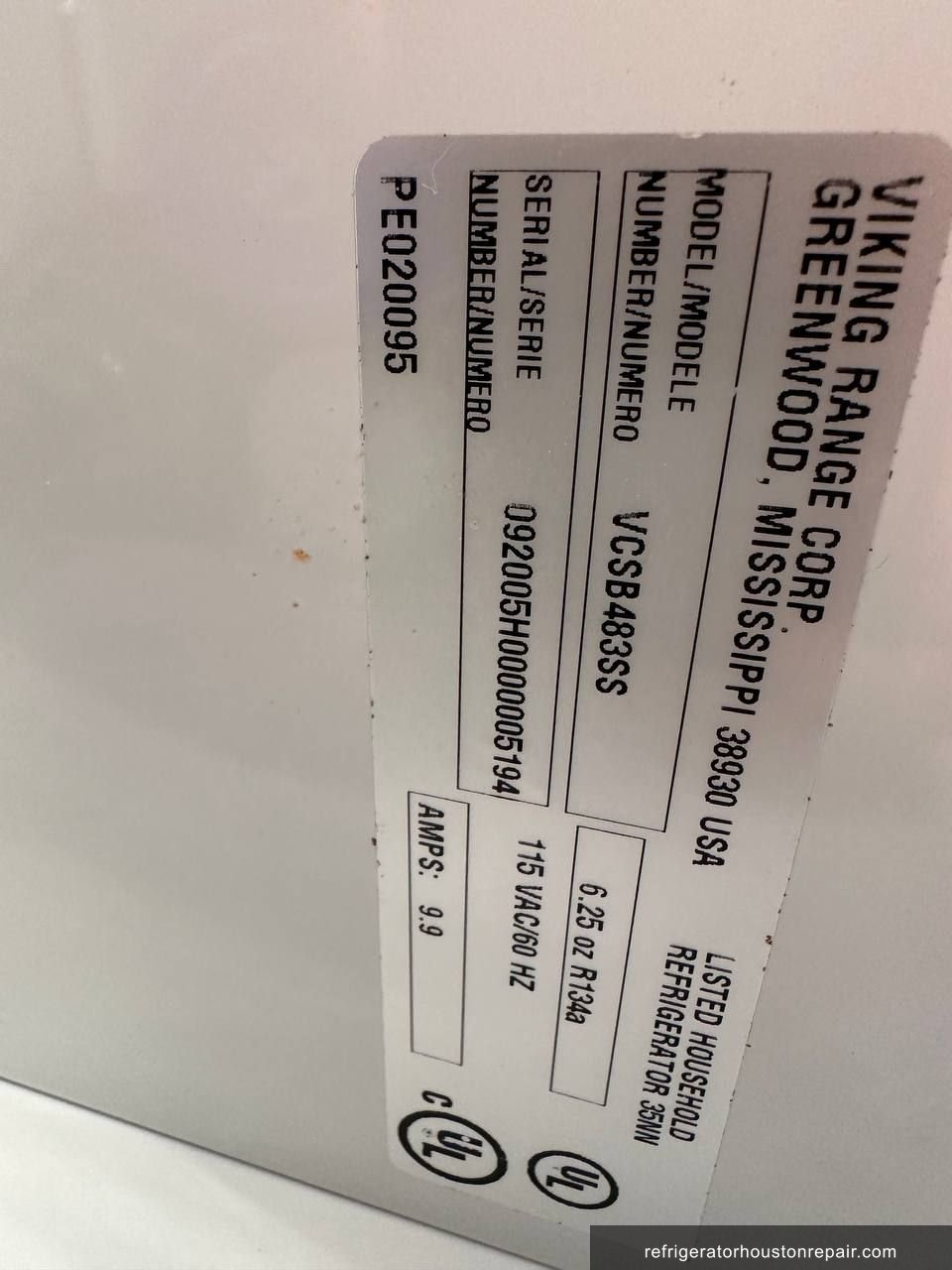
On arrival at the League City home, the Viking VCSB483SS was completely inoperative — both compartments at approximately 78°F after sitting warm overnight. The evaporator fan was spinning, but the compressor was not sustaining a run cycle. Manifold gauges connected to the R-134a service ports showed system pressure equalized at static — no pressure differential between high and low sides, confirming the compressor had lost all pumping capacity. Clamp meter readings on the compressor start winding measured a spike-and-drop pattern consistent with locked rotor or seized internals. Inverter board output voltage was erratic under load — the board was sending malformed PWM signals to the compressor motor, which on Viking's variable-speed platform means neither component was functioning correctly. The compressor was cut out and internally inspected via the service port — significant oil contamination was found circulating through the refrigerant lines, a known failure signature when a scroll or reciprocating compressor loses its internal seal integrity. On R-134a systems like this Viking, oil migration into the evaporator and condenser coils dramatically reduces heat exchange efficiency and accelerates inverter board failure due to thermal stress from extended failed-start attempts. Root cause: mechanical compressor failure leading to oil contamination throughout the sealed system, compounded by inverter board damage from repeated failed-start cycling.
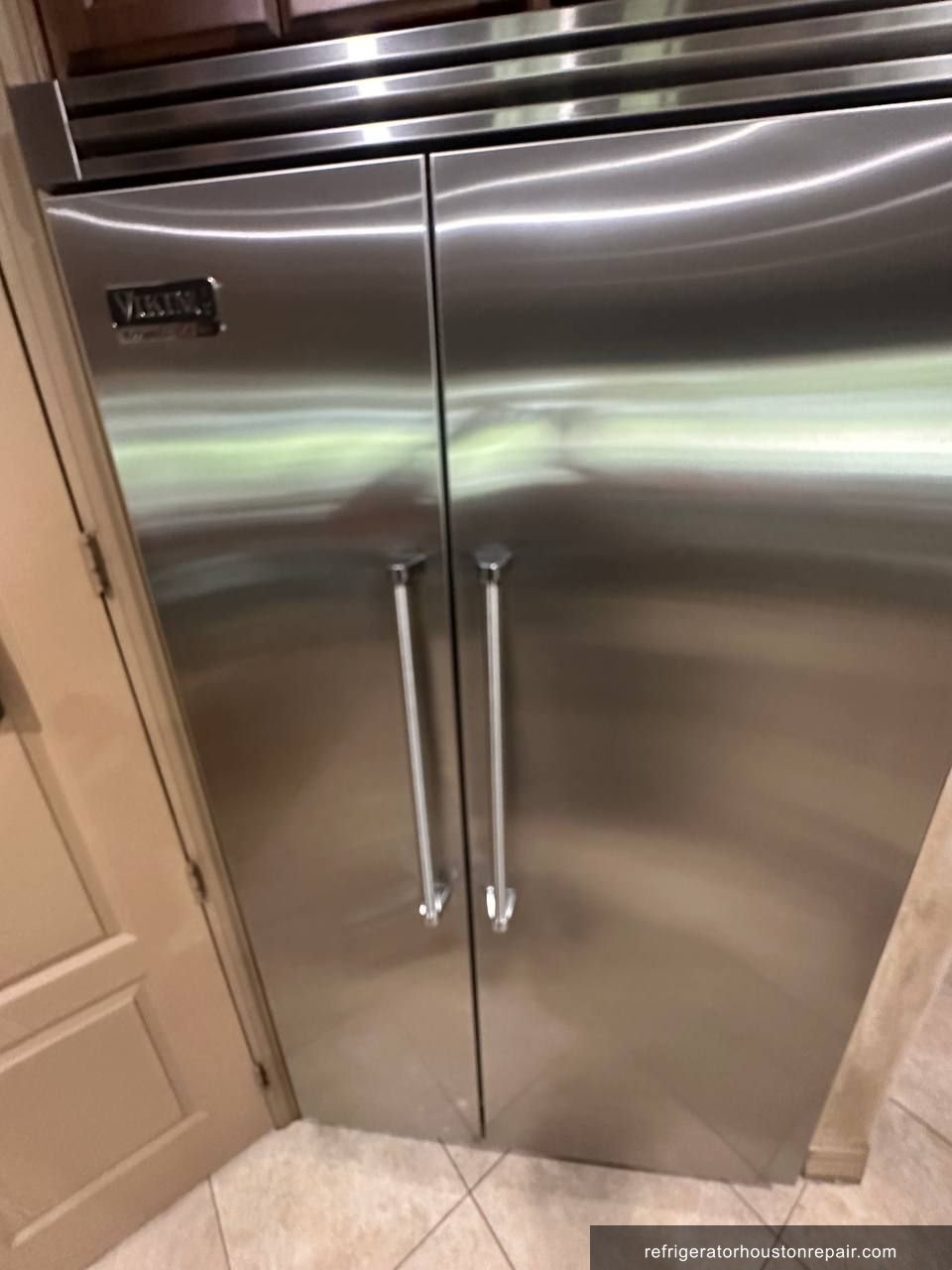
🔧 The Repair
- ✓Step 1: Recovered residual R-134a refrigerant from the sealed system using a certified recovery machine, following EPA 608 protocol.
- ✓Step 2: Cut out the failed compressor at the suction and discharge lines using a pipe cutter, capped and sealed immediately to prevent atmospheric moisture ingress into the open system.
- ✓Step 3: Flushed the entire sealed system — evaporator coil, condenser coil, and interconnecting copper lines — with dry nitrogen (N2) at controlled pressure to purge compressor oil contamination. Multiple nitrogen purge cycles were run until discharge showed clean flow with no oil residue.
- ✓Step 4: Replaced the failed OEM-spec R-134a compressor with a direct replacement unit matched to the VCSB483SS label specifications — correct displacement and winding resistance verified before installation.
- ✓Step 5: Replaced the suction-line filter-drier with a new molecular sieve drier rated for R-134a, essential after any open-system contamination event.
- ✓Step 6: Replaced the inverter board — the existing board showed burned PWM driver traces consistent with thermal damage from extended failed-start cycling. New board programmed to Viking VCSB483SS variable-speed compressor parameters.
- ✓Step 7: All copper joints brazed under continuous nitrogen purge to prevent internal oxidation scale formation — critical on R-134a systems where oxide scale can clog capillary tubes and damage the new compressor.
- ✓Step 8: Deep vacuum pulled to below 200 microns and held for 30 minutes to confirm system integrity, then charged with exactly 6.26 oz (178g) of R-134a per the label specification. After a 2-hour runtime, fresh food compartment stabilized at 37°F and freezer at 0°F — fully within Viking's operating spec.
✓ Result
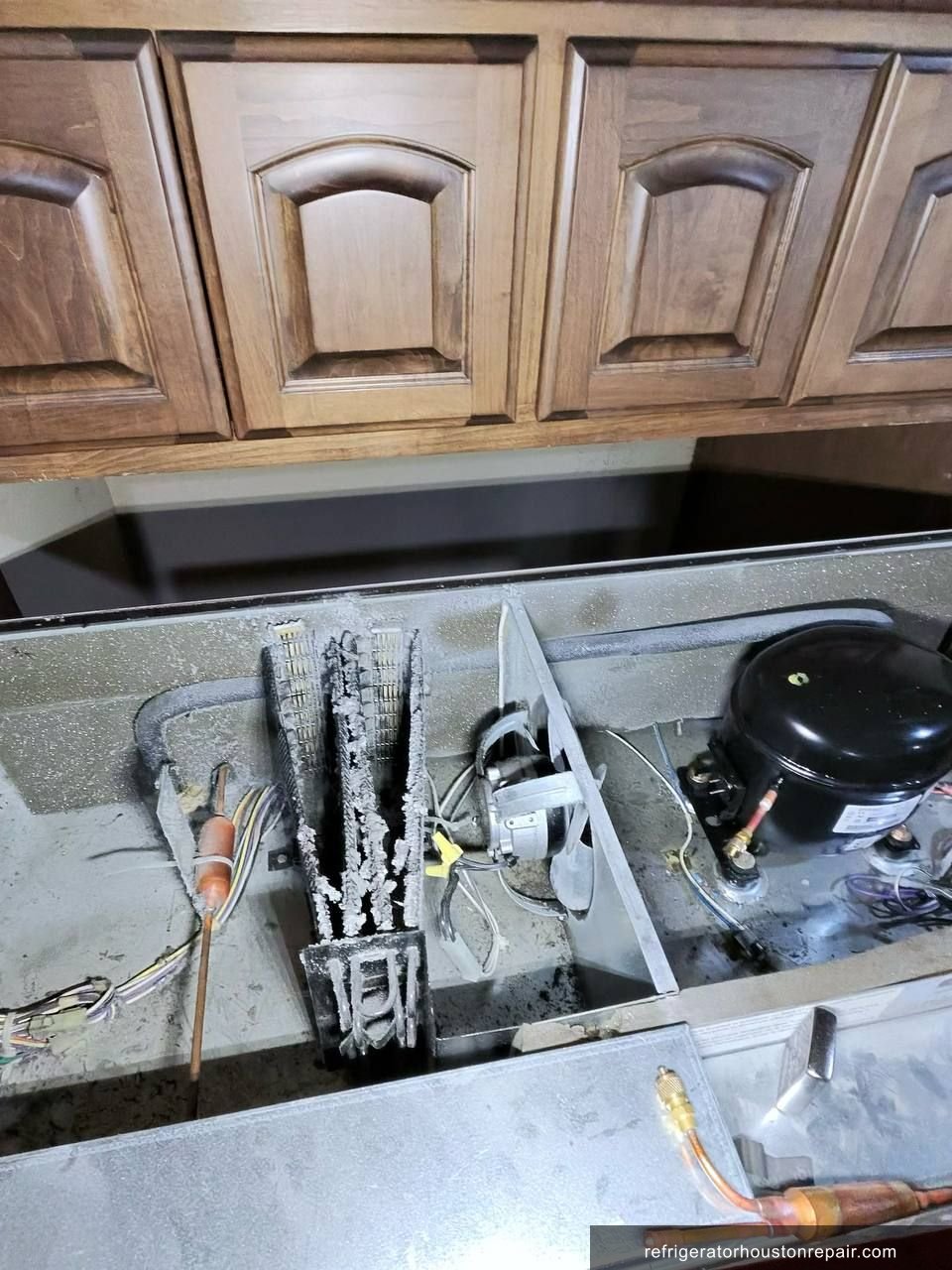
After a 2-hour post-charge runtime, the Viking VCSB483SS had fully recovered: fresh food section reading 37°F, freezer at 0°F. The condenser coil was also cleaned during the visit, which the homeowner noted had never been done in the unit's service life. The League City homeowner was able to restock the refrigerator the same evening. They mentioned they had been convinced the unit was beyond saving given its 2005 build date — the complete sealed system overhaul extended its functional life significantly. A 90-day labor warranty was provided on the sealed system repair.
💡 Technician Notes
Viking's variable-speed compressor platform from the mid-2000s — including units like the VCSB483SS — pairs the compressor mechanically with an inverter board that controls run speed. When the compressor begins to fail internally, it doesn't just stop working: it enters a repeated start-attempt loop that sends thermal stress back into the inverter board. By the time the refrigerator goes completely warm, both components are often damaged. The early warning sign unique to this failure mode is a cycling compressor that runs for 30–60 seconds then clicks off, repeating every few minutes — homeowners often mistake this for normal defrost cycling, but on Viking units it signals inverter-compressor communication breakdown. Preventive maintenance that directly reduces this failure risk: clean the condenser coils every 12 months. Restricted condenser airflow forces the compressor to run hotter and longer, accelerating both compressor seal wear and inverter board thermal fatigue. Call immediately — do not wait — if you hear the clicking start-stop pattern described above. Every failed start attempt compounds the inverter board damage. Waiting even 48 hours can turn a compressor-only repair into a full sealed system overhaul.
Frequently Asked Questions
Why did my Viking VCSB483SS stop cooling completely all of a sudden?
On Viking's mid-2000s variable-speed refrigerators, sudden complete cooling loss is usually a compressor or inverter board failure — or both together. The inverter board controls compressor speed, so when either component fails, the system shuts down entirely. Unlike single-speed compressor designs, a failed inverter board on a Viking means the compressor gets no usable signal at all, making the unit go from cooling normally to completely warm within hours.
How much does it cost to replace a compressor and inverter board on a Viking refrigerator in League City?
A full sealed system overhaul on a Viking — compressor, inverter board, filter-drier, nitrogen flush, and R-134a recharge — typically runs between $900 and $1,400 in the League City and Clear Lake area depending on parts sourcing. Viking OEM components carry a premium. Labor on sealed system work is also higher than a standard repair because brazing under nitrogen and EPA 608 certified handling of refrigerant requires specialized equipment and training.
What happens if I keep running my Viking refrigerator after the compressor starts clicking on and off?
Each failed start attempt on a Viking's inverter-driven compressor sends a voltage spike back through the inverter board. If you continue running the unit in this state, what might have been a compressor-only repair becomes a compressor-plus-inverter-board replacement — a significantly more expensive outcome. Beyond component damage, the repeated start attempts also push compressor oil into the refrigerant lines, requiring a full system flush rather than a simple compressor swap.
Is it worth repairing a 2005 Viking VCSB483SS, or should I just replace it?
A 2005 Viking built-in refrigerator is worth repairing if the cabinet and sealed system are structurally sound. Viking built-in units from that era have heavy-gauge cabinets and quality door hardware that can outlast two or three compressor cycles. A new comparable built-in refrigerator runs $5,000–$9,000+. A full sealed system overhaul at $900–$1,400 is a straightforward financial decision — especially when the alternative is a full kitchen renovation to fit a different unit footprint.
Why is the R-134a charge weight so precise on the Viking VCSB483SS?
On small sealed systems like the Viking VCSB483SS, the factory refrigerant charge is engineered to match the specific volume and thermal load of the evaporator and condenser coils. The label specifies exactly 6.26 oz of R-134a — overcharging or undercharging by even half an ounce degrades system efficiency, causes abnormal pressures, and shortens compressor life. This is why sealed system work must always be charged by weight using a calibrated digital scale rather than by pressure readings alone.
Repair Summary
- Brand
- Viking
- Model
- VCSB483SS
- Repair Type
- Sealed System Overhaul — Compressor Replacement, Inverter Board Replacement, System Flush
- Refrigerant
- R-134a
- Root Cause
- Failed compressor contaminating sealed system with oil, inverter board failure
- Parts Replaced
- ✓Reciprocating compressor — R-134a rated, matched to Viking VCSB483SS label displacement spec (OEM-equivalent replacement)
- ✓Suction-line filter-drier — molecular sieve type, R-134a compatible
- ✓Inverter board — Viking VCSB483SS variable-speed compressor controller, direct OEM replacement
- ✓R-134a refrigerant — 6.26 oz / 178g per confirmed label specification
- Location
- League City, TX 77573
- Status
- ✓ Completed
Service Area
We provide refrigerator repair service in League City and surrounding areas.
View League City Service Area →📸 Repair Photos
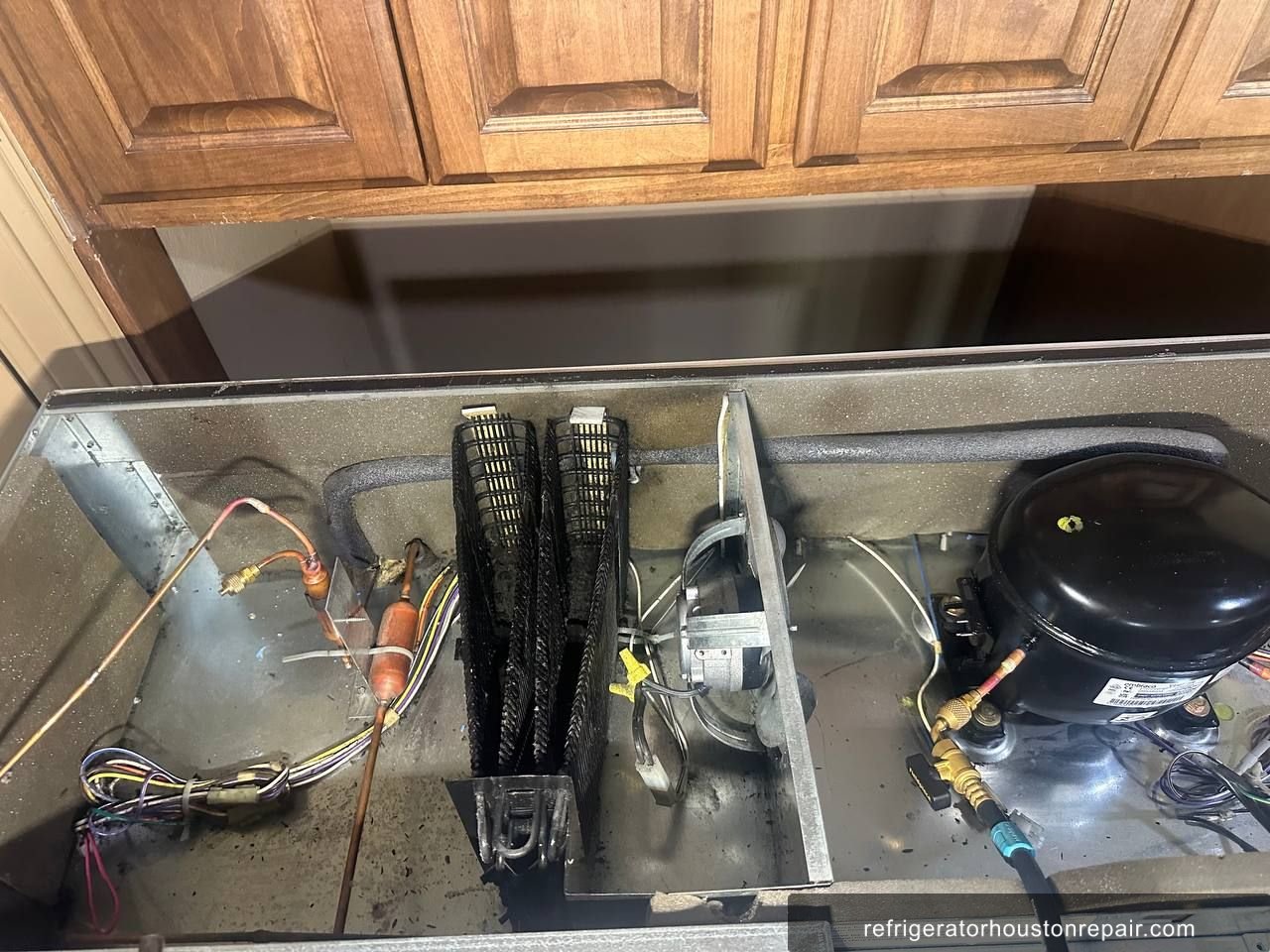
Viking VCSB483SS repair in League City, TX — photo 3
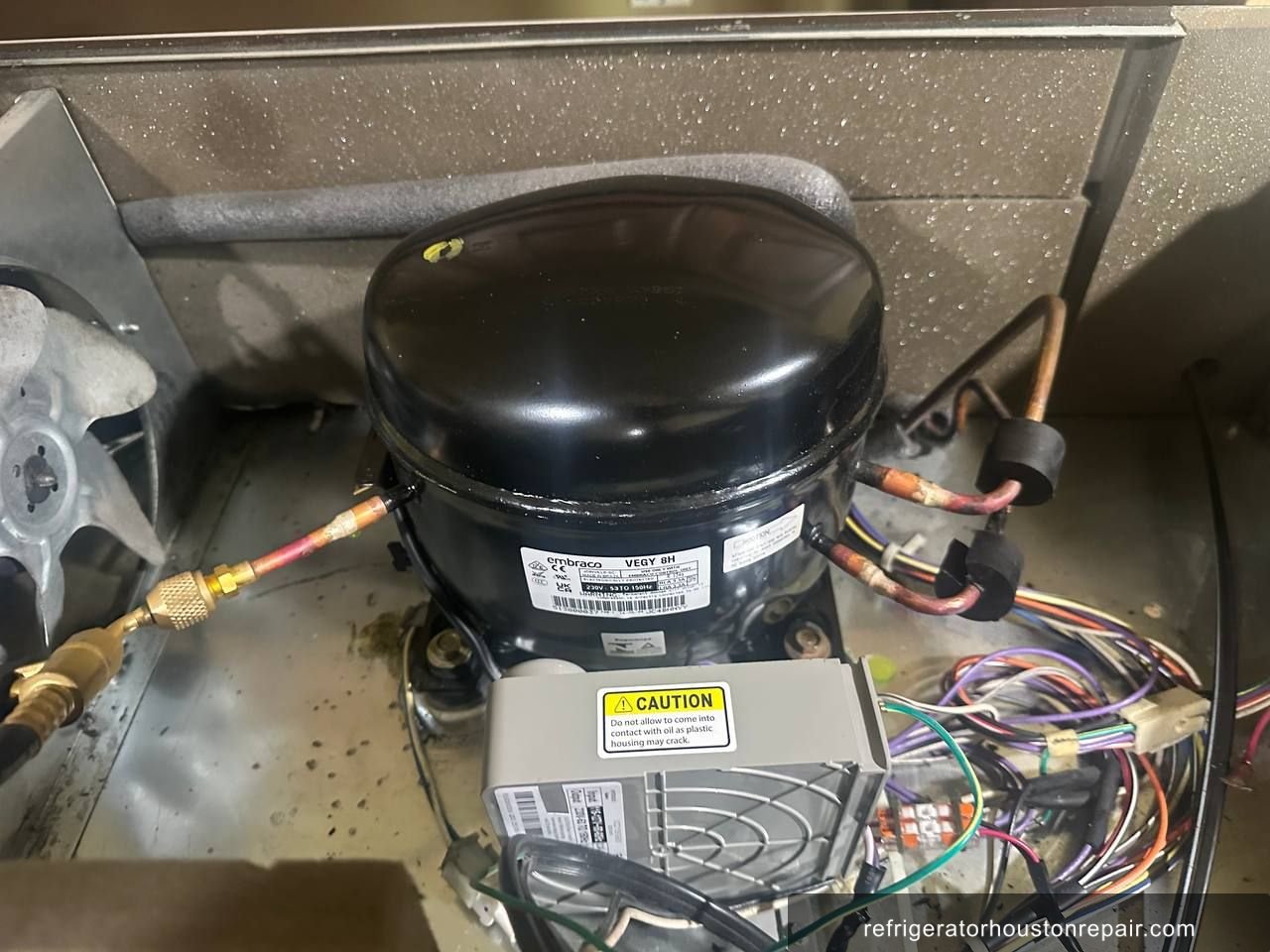
Viking VCSB483SS repair in League City, TX — photo 4
Need Viking Refrigerator Repair in League City?
We serve League City and all surrounding Houston areas. Same-day service available.