Sub-Zero 648PROG Compressor & Inverter Board Replacement
📞 Call (346) 512-3688🔧 Performed by Alex
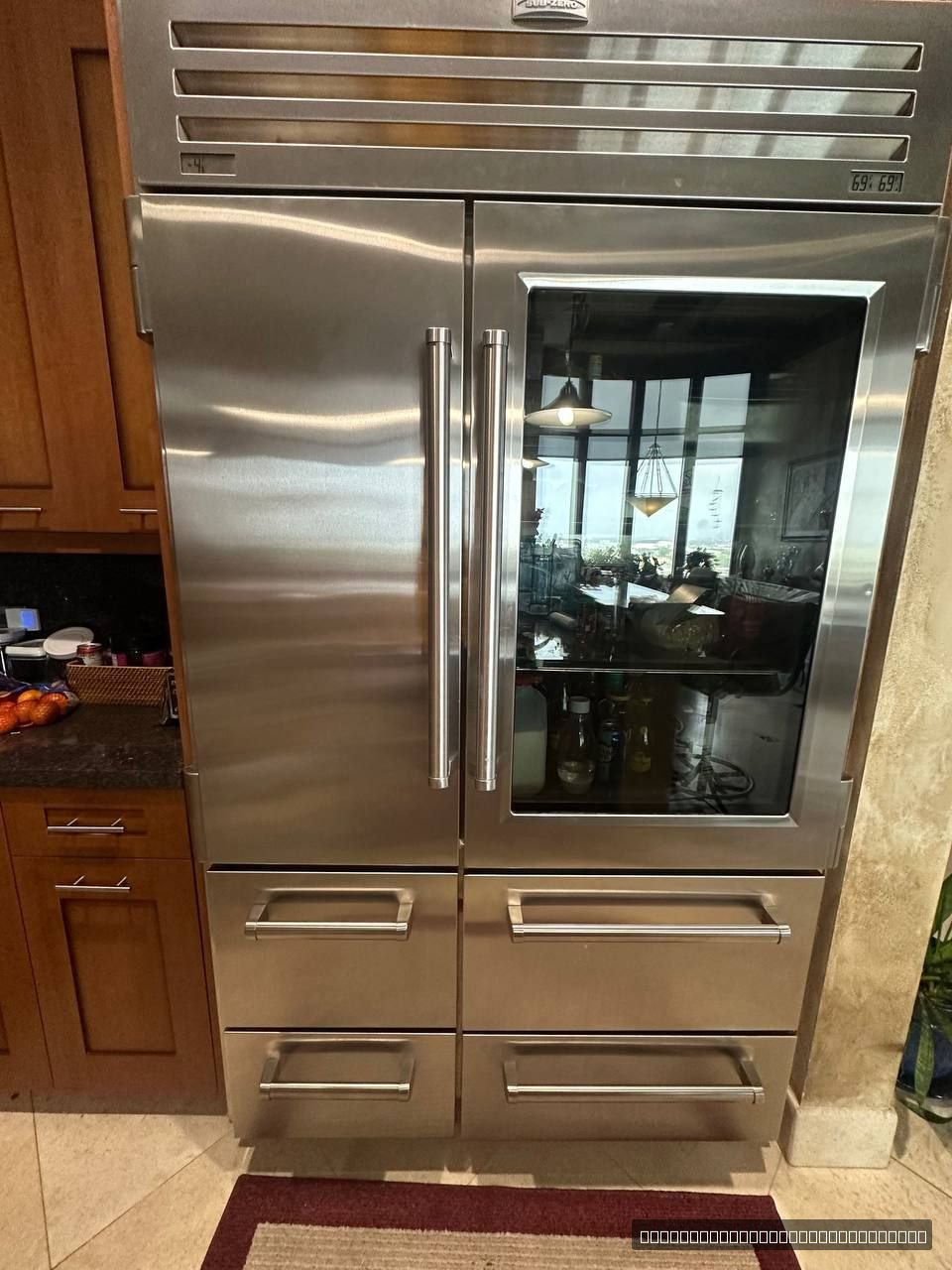
The Problem
- •Refrigerator and freezer sections both displaying 69°F — room temperature — on the control panel
- •Neither the fresh food compartment nor the freezer drawers are cooling at all
- •No audible compressor operation or refrigeration cycle activity
- •Food spoiling rapidly in both compartments despite thermostat set to normal temperatures
🔍 Diagnosis
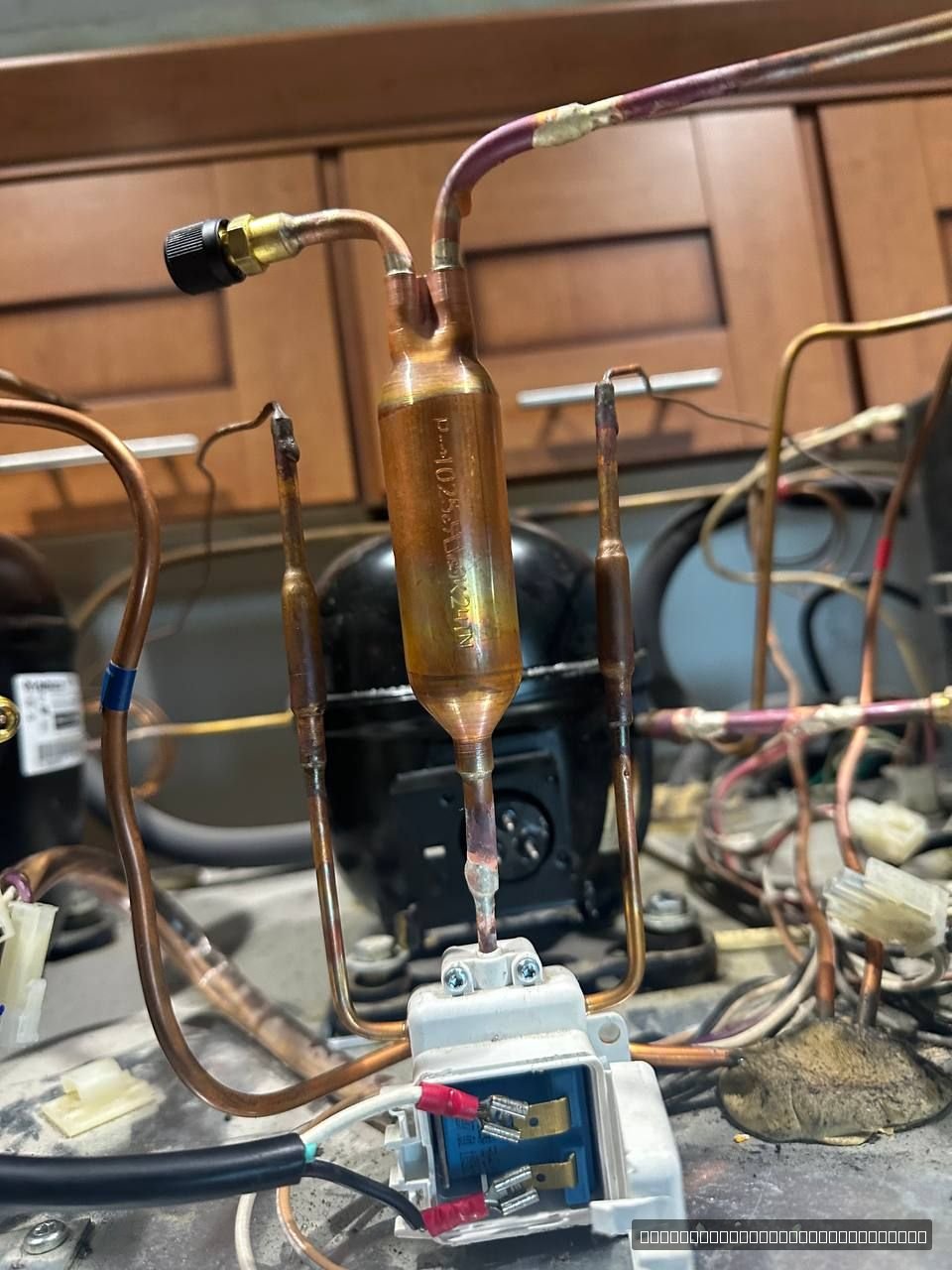
Upon arrival at the Seabrook residence, the Sub-Zero 648PROG (serial F2538299, manufactured August 2006, 115V/60Hz/1Ph, 8.8A, R-134a) presented with both display zones reading 69°F — ambient room temperature — confirming complete refrigeration failure across both independent cooling circuits. The 648PROG uses a single-compressor dual-circuit architecture with a three-way solenoid valve distributing refrigerant between the fresh food evaporator (4.0 oz R-134a charge) and the freezer evaporator array (6.0 oz R-134a charge). The compressor is driven by a variable-speed inverter board rather than a conventional start relay and run capacitor, making electronic diagnosis essential before condemning mechanical components. Visual inspection of the inverter board revealed characteristic thermal discoloration and swollen electrolytic capacitors consistent with 19 years of service and cumulative heat stress. With the board in circuit, the compressor was completely silent. Bypassing the inverter board and applying test voltage directly to the compressor motor windings produced weak, hesitant rotation — consistent with a borderline compressor on the verge of failure. Resistance measurement across the 3-way valve solenoid coil returned an open circuit, confirming winding failure. Refrigerant recovery from both circuits via the Fieldpiece manifold station showed the fresh food circuit was significantly undercharged relative to its 4.0 oz nameplate specification, indicating a slow ongoing leak through degraded valve seals. All three primary components — inverter board, compressor, and 3-way valve — were confirmed failed and required replacement.
🔧 The Repair
- ✓Removed decorative front panels and ventilation grilles from the upper compressor compartment to access the machine room on this built-in 48-inch model.
- ✓Photographed all existing wiring harness routing, refrigerant line connections, and component positions before disassembly to ensure accurate reassembly.
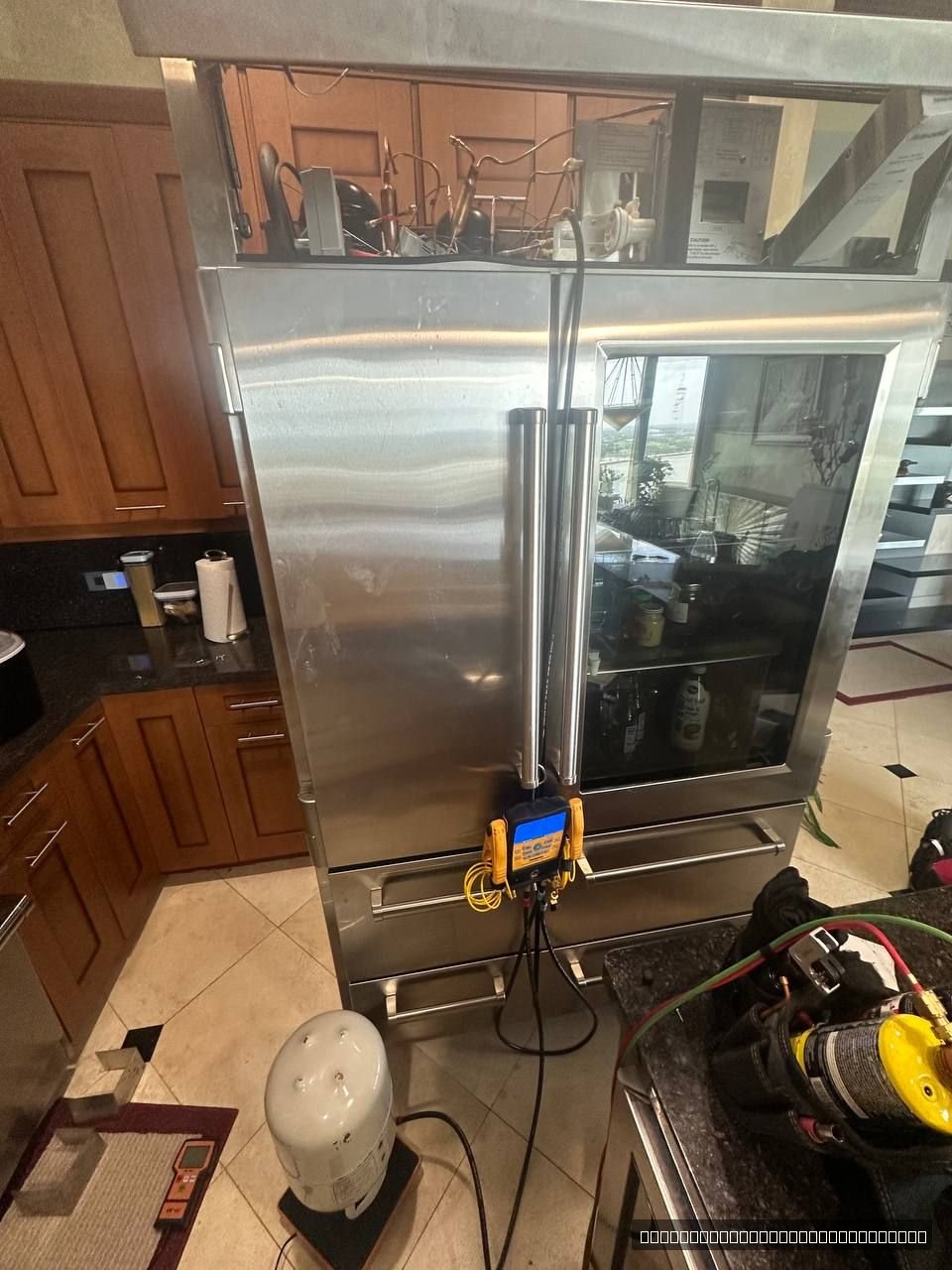
- ✓Connected the Fieldpiece manifold gauge set to both service ports and performed separate refrigerant recovery of the fresh food circuit (nominally 4.0 oz R-134a) and the freezer circuit (nominally 6.0 oz R-134a) using a certified recovery station, logging recovered quantities from each circuit independently.
- ✓Removed the failed 3-way distribution valve by carefully cutting the four copper refrigerant lines at safe working distances from the body; cleaned all tube ends with emery cloth to remove oxidation in preparation for re-brazing.
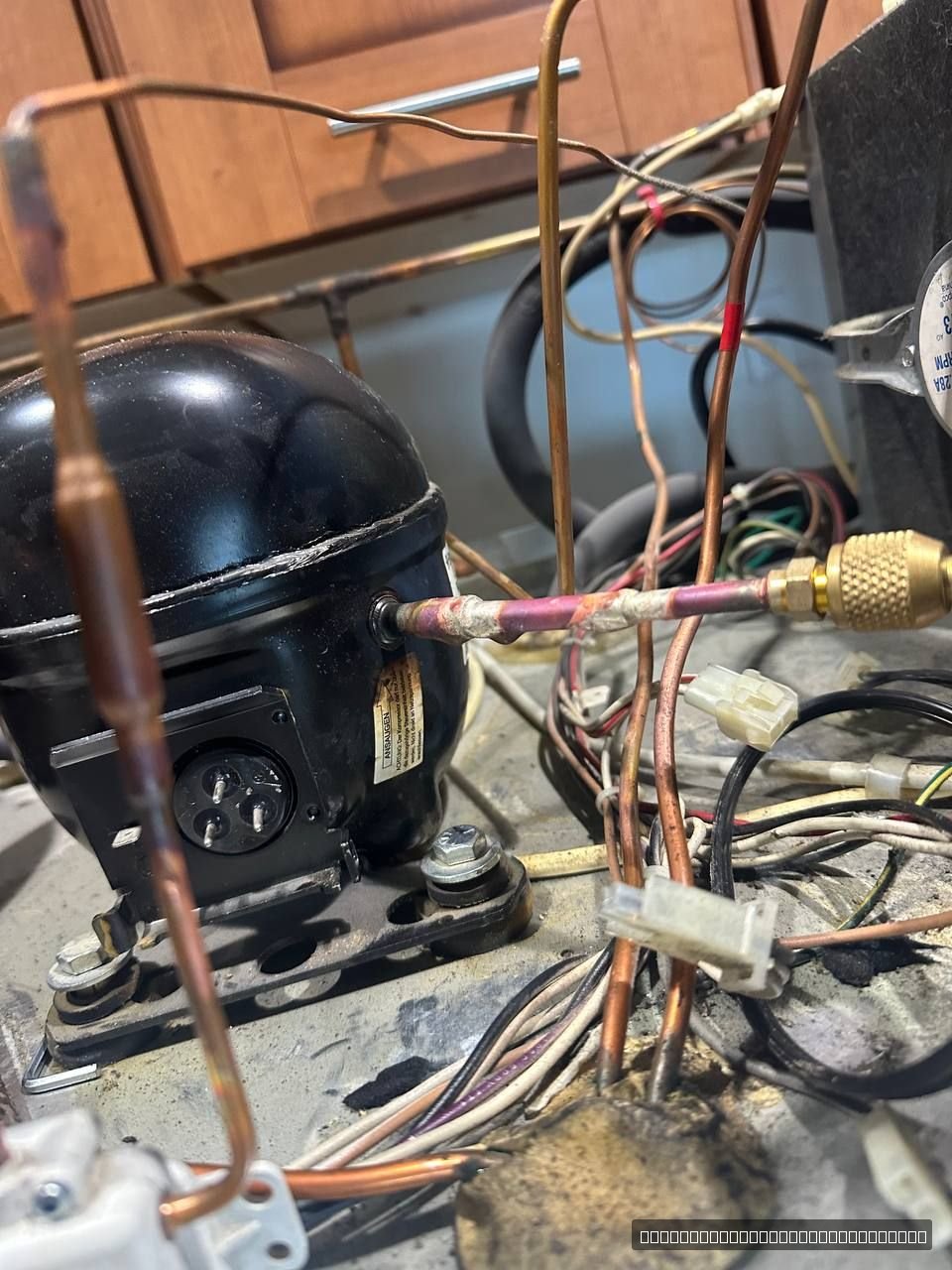
- ✓Cut the failed compressor free from its copper line set; drained and inspected residual oil through the service port — oil was dark and degraded, confirming internal compressor wear consistent with 19 years of operation.
- ✓Cleaned the condenser coil assembly thoroughly to remove accumulated dust and oil vapor deposits that were reducing heat rejection efficiency.
- ✓Installed a new R-134a-compatible compressor of matching capacity; installed a new multi-port torpedo-style filter-drier to capture residual moisture, acid, and particulate contamination introduced during the failure event.
- ✓Brazed all copper joints — new compressor connections, new 3-way valve connections, and filter-drier fittings — using silver-bearing solder with continuous dry nitrogen purge flowing at 2–3 PSI through the line set to prevent internal oxidation scale formation.
- ✓Performed a multi-cycle nitrogen flush of the complete refrigerant circuit in both flow directions to purge degraded oil residue, sludge, and particulate matter accumulated over 19 years; discharge effluent was visibly dark with a characteristic burnt oil odor.
- ✓Installed the replacement inverter control board in its factory mounting location and connected all harness plugs per wiring diagram pinout; verified no fault codes on the main control display.
- ✓Evacuated both circuits simultaneously using a dual-port manifold setup, achieving deep vacuum and holding for a minimum leak-down period to confirm hermetic integrity of all new brazed joints before charging.
- ✓Charged the fresh food circuit with exactly 4.0 oz R-134a by weight and the freezer circuit with exactly 6.0 oz R-134a by weight per nameplate specifications using a calibrated digital refrigerant scale; monitored suction and discharge pressures, superheat (achieved 10–12°F), and subcooling on both circuits during initial run-in to confirm proper system operation.
- ✓Verified the 3-way valve switching on command from the main control board with an audible click; confirmed compressor speed modulation by the inverter board under changing thermal load; reinstalled all ventilation grilles and decorative panels.
✓ Result
Both cooling circuits were fully restored. Within two hours of the completed repair, the fresh food compartment stabilized at 38°F and all four freezer drawers reached 0°F — matching Sub-Zero factory target temperatures. The control panel display cleared and showed accurate zone temperatures for the first time in weeks. The customer, who had considered the unit beyond economic repair, was relieved to have the 648PROG fully operational. A 90-day labor warranty and 1-year parts warranty on all replaced components were provided at job completion.
💡 Technician Notes
The Sub-Zero 648PROG is an exceptionally long-lived appliance, but its dual-circuit architecture with an inverter-driven compressor introduces failure modes unfamiliar to technicians accustomed to conventional single-circuit refrigerators. On units approaching 15–20 years of service, the inverter board's electrolytic capacitors are a predictable wear item — watch for erratic compressor behavior, unusual speed cycling, or fault codes before complete failure occurs. The 3-way valve solenoid coil should be checked with a multimeter whenever one zone loses cooling while the other remains functional; an open winding is a common and often overlooked cause. Keep the condenser coil clean — Sub-Zero recommends cleaning every 6–12 months on built-in models where the condenser is enclosed. Reduced condenser airflow dramatically shortens compressor life. If your 648PROG displays ambient temperature on either zone, do not delay service; continued operation with a failed circuit accelerates degradation of the remaining components. Always use weight-based refrigerant charging on this model — pressure-only methods will result in an incorrect charge on small-volume circuits like these.
Frequently Asked Questions
Why is my Sub-Zero 648PROG showing room temperature (69°F) on both the refrigerator and freezer displays?
When a Sub-Zero 648PROG displays ambient room temperature on both zones, it almost always means the compressor is not running. On this model, the most common causes are a failed inverter board, an open 3-way valve solenoid, or a failed compressor. All three components work together — if any one fails, neither cooling circuit can operate. A qualified technician should diagnose the inverter board and solenoid before condemning the compressor.
How much does it cost to replace the compressor and inverter board on a Sub-Zero 648PROG in Seabrook, TX?
A full sealed system repair on a Sub-Zero 648PROG — including compressor, inverter board, 3-way valve, filter-drier, refrigerant recovery, nitrogen brazing, and recharge — is a major repair typically ranging from $1,500 to $2,800 depending on parts availability and labor time. However, given that a new 648PROG lists above $15,000, a properly executed repair by a certified technician is almost always the economically sound choice for a well-maintained unit.
What are the early warning signs that the inverter board is failing on a Sub-Zero 648PRO series refrigerator?
Early signs of inverter board failure on Sub-Zero 648PRO models include erratic compressor cycling — the unit starts and stops more frequently than normal — unusual humming or buzzing from the machine compartment, one zone losing temperature while the other holds, or the compressor running continuously at low speed without achieving setpoint temperatures. On units over 15 years old, swollen capacitors on the board are a reliable visual indicator of imminent failure.
Is it worth repairing a 2006 Sub-Zero 648PROG with a failed compressor, or should I replace it?
For a Sub-Zero 648PROG, repair is almost always worthwhile even on a 19-year-old unit. The cabinet, door panels, and installation framing represent significant investment beyond the appliance itself. A new 648PROG exceeds $15,000 and requires professional installation. If the sealed system can be fully restored — compressor, inverter board, and valve replaced with quality components — you gain many additional years of service at a fraction of replacement cost, especially if the cabinet and controls are otherwise sound.
How long does it take a Sub-Zero 648PROG to reach normal temperature after a sealed system repair?
After a complete sealed system repair — compressor replacement, refrigerant recharge, and inverter board replacement — a Sub-Zero 648PROG typically reaches its setpoint temperatures within 2 to 3 hours under normal ambient conditions. The fresh food section should stabilize near 38°F and the freezer drawers near 0°F within that window. Avoid loading the unit with warm food immediately after startup; allow the system to stabilize at temperature first for best results.
Repair Summary
- Brand
- Sub-Zero
- Model
- 648PROG
- Repair Type
- Sealed System Repair / Compressor Replacement / Inverter Board Replacement
- Refrigerant
- R-134a
- Root Cause
- Failed inverter board, dead compressor, and open 3-way valve solenoid
- Parts Replaced
- ✓Compressor — R-134a compatible, matched capacity for Sub-Zero 648PROG dual-circuit sealed system
- ✓Three-way refrigerant distribution valve (3-way solenoid valve) with replacement solenoid coil — open-circuit winding confirmed on original
- ✓Inverter control board (variable-speed compressor drive module) — thermal damage and failed electrolytic capacitors on original
- ✓Filter-drier — multi-port torpedo-style copper body, R-134a rated, installed new per sealed system service protocol
- ✓R-134a refrigerant — 4.0 oz fresh food circuit, 6.0 oz freezer circuit, charged by weight per nameplate
- Location
- Seabrook, TX 77586
- Status
- ✓ Completed
Service Area
We provide refrigerator repair service in Seabrook and surrounding areas.
View Seabrook Service Area →📸 Repair Photos
Sub-Zero 648PROG repair in Seabrook, TX — photo 5
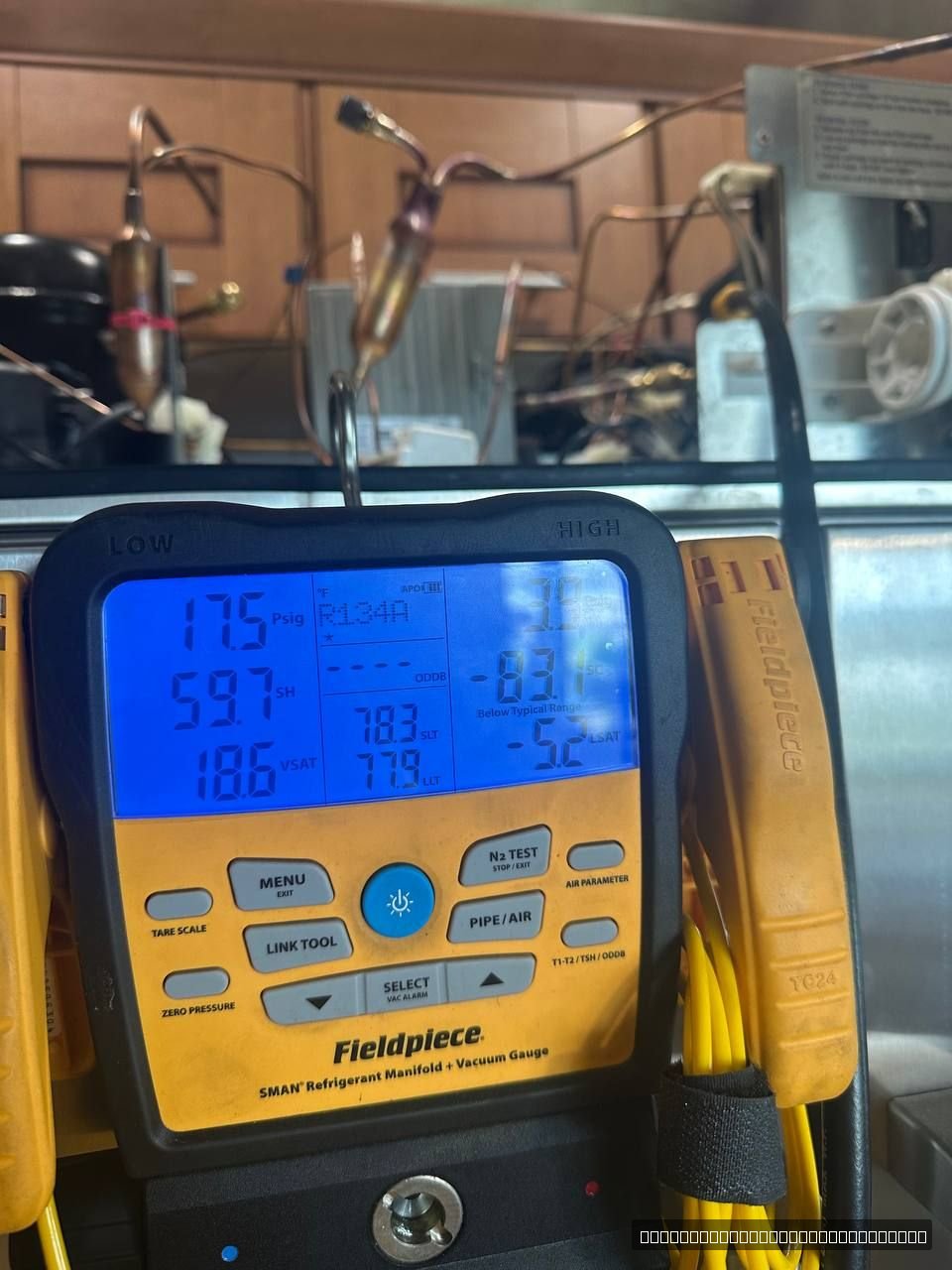
Sub-Zero 648PROG repair in Seabrook, TX — photo 6
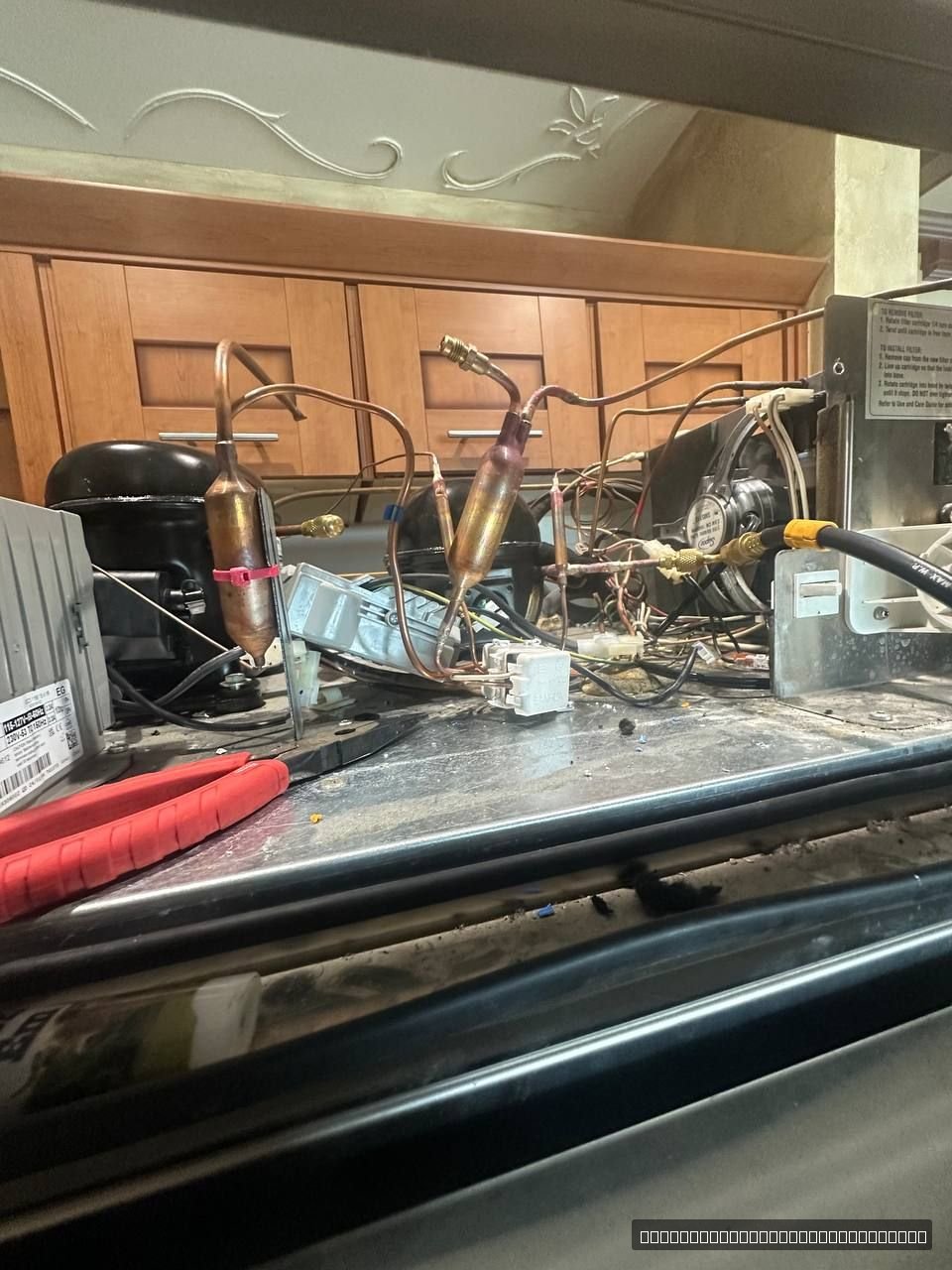
Sub-Zero 648PROG repair in Seabrook, TX — photo 7
Need Sub-Zero Refrigerator Repair in Seabrook?
We serve Seabrook and all surrounding Houston areas. Same-day service available.