Sub-Zero 601F/43 Door Gasket Replacement & R-134a Recharge
📞 Call (346) 512-3688🔧 Performed by Alex
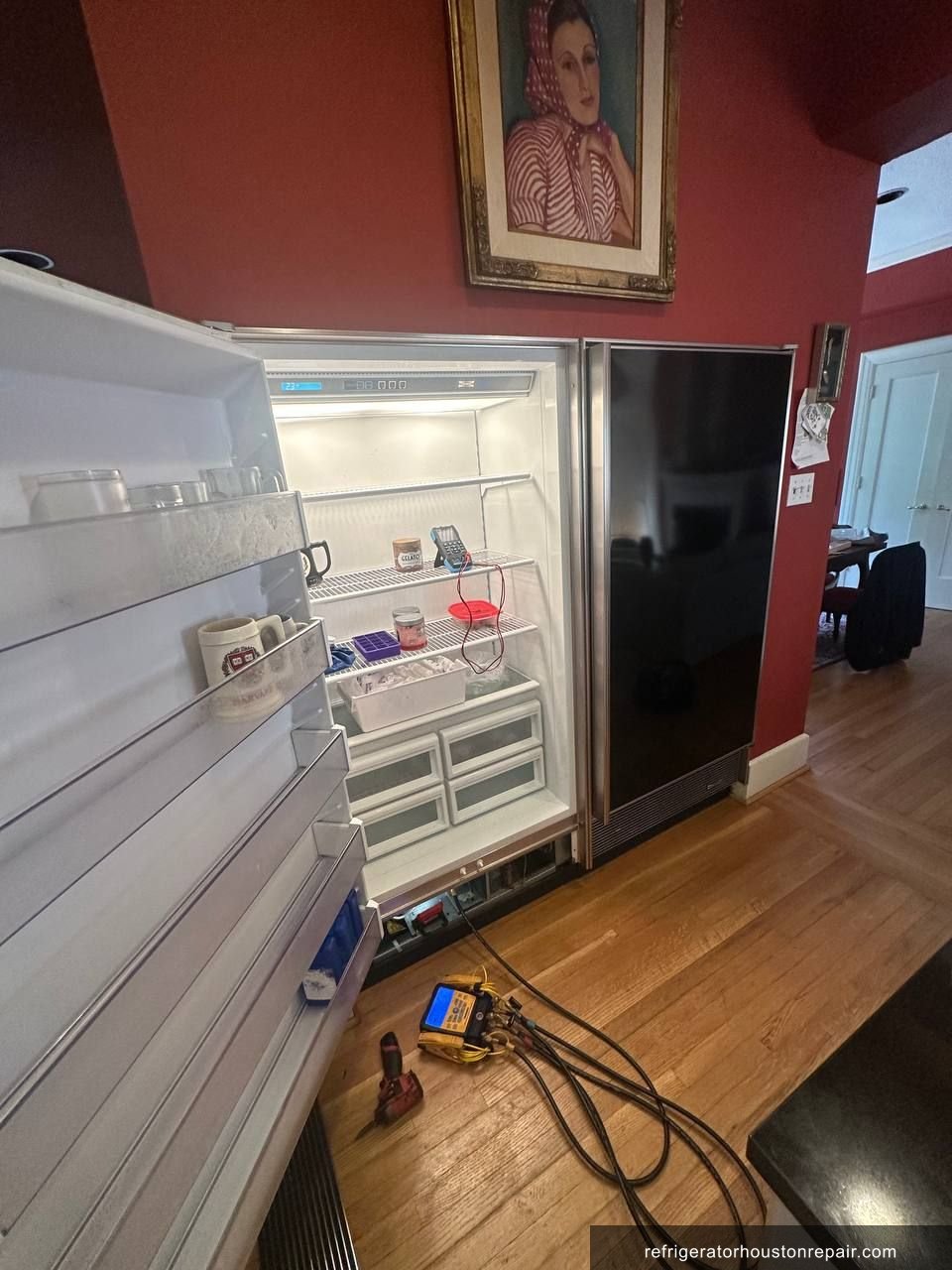
The Problem
- •Compressor running significantly longer cycles than normal
- •Freezer temperature fluctuating and not holding set point
- •Frost accumulating in unusual locations around the door opening
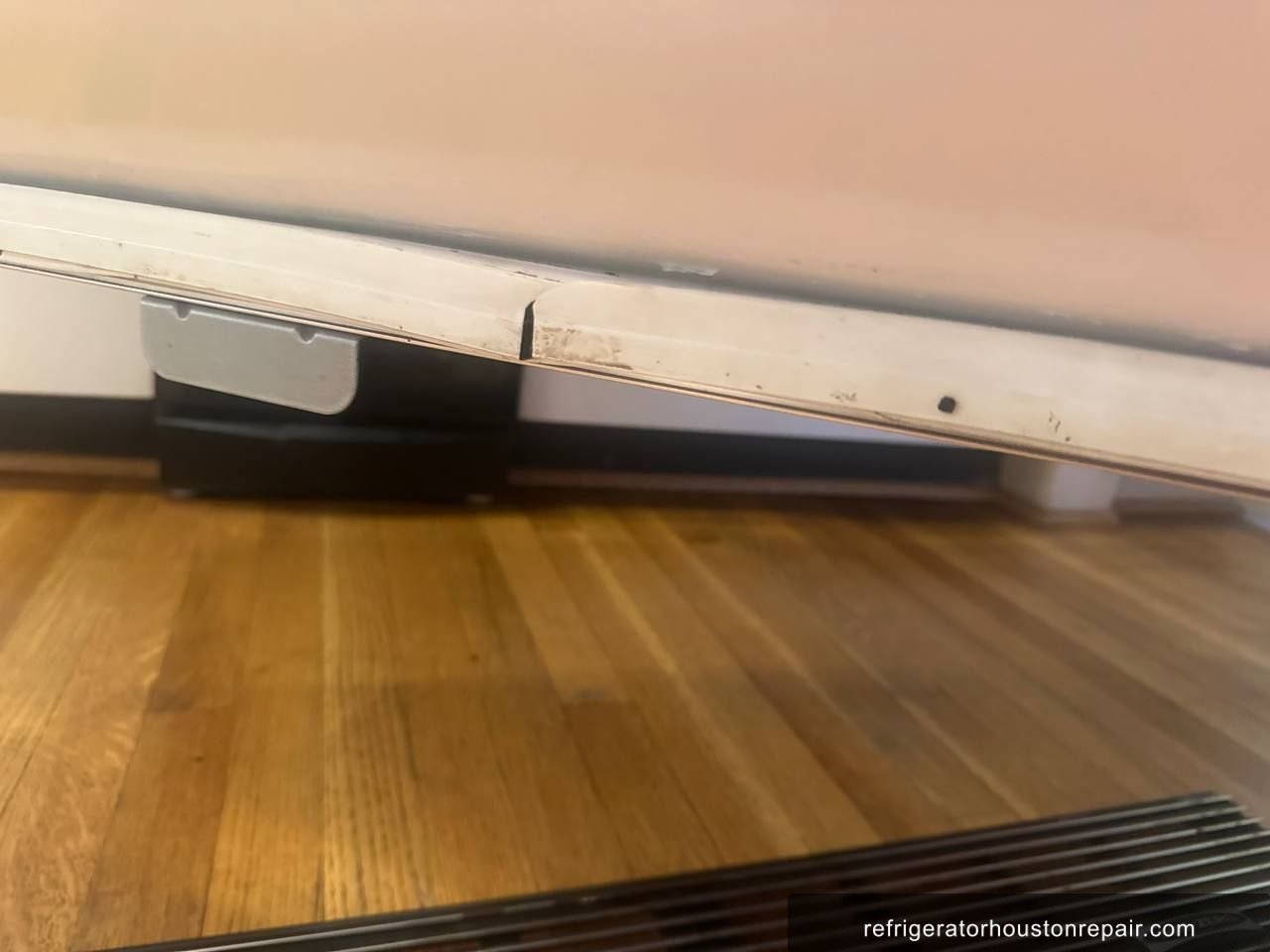
- •Visible gap along the bottom door perimeter — door not sealing evenly
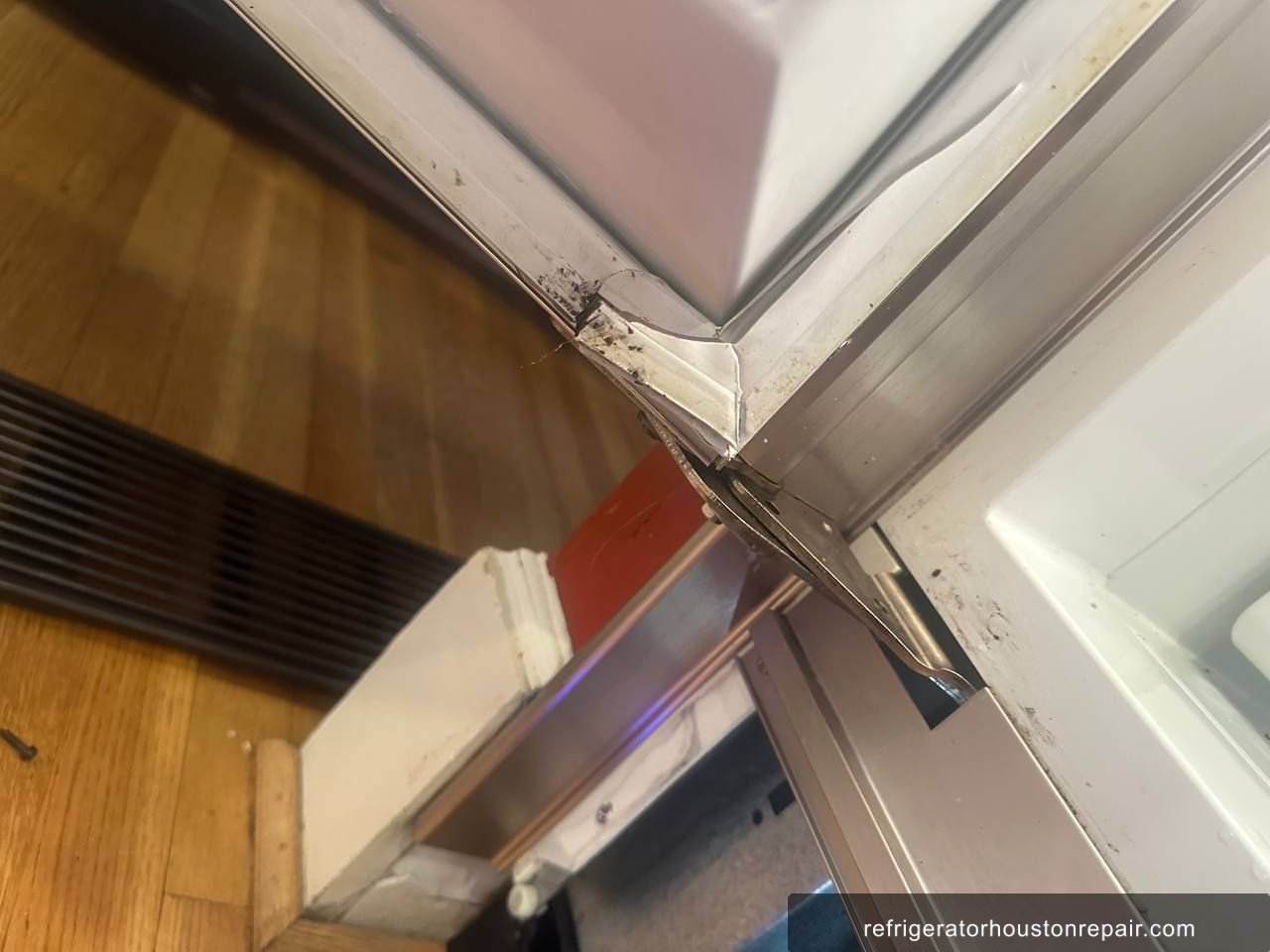
- •Mold and dark residue buildup around door seal corners
🔍 Diagnosis
Upon arrival at the Houston 77006 residence, the technician performed a full inspection of this Sub-Zero 601F/43 all-freezer unit (S/N: W2922733, manufactured January 2009, Madison, WI). The unit had been in service for approximately 16 years. Visual inspection of the door gasket immediately revealed critical deterioration: the magnetic insert had lost its holding force, rubber had hardened and deformed — particularly at all four corners — and black mold colonies had developed in the crevices where condensate had been collecting due to chronic air infiltration. A paper-pull test at multiple points around the perimeter confirmed zero resistance, indicating complete seal failure. The technician then connected a Fieldpiece manifold gauge set to the service ports to evaluate system charge. Suction and discharge pressures were both below expected operating range for R-134a at ambient conditions, confirming refrigerant loss consistent with slow micro-leaks through fittings, nipples, and seal diffusion accumulated over 16 years of operation. An electronic leak detector sweep was performed across all accessible joints and the compressor body — no single catastrophic leak point was identified, consistent with distributed micro-leak loss over time. The condenser coil was inspected and found coated with a heavy layer of dust and organic debris, measurably reducing heat rejection efficiency. All findings were consistent with the customer's reported symptoms: extended run cycles were the compressor's attempt to compensate for reduced refrigerant mass flow and warm air infiltration.
🔧 The Repair
- ✓Recovered all remaining R-134a refrigerant from the sealed system into a certified recovery cylinder using a Fieldpiece recovery machine, in full compliance with EPA Section 608 regulations — zero atmospheric release.
- ✓Removed the deteriorated OEM door gasket by releasing it from the retaining channel around the full door perimeter; cleaned and degreased the gasket groove using isopropyl alcohol to remove mold residue and adhesive contamination.
- ✓Installed a new OEM-specification Sub-Zero door gasket matched to the 601F/43 door profile; seated the magnetic insert firmly into the retaining channel, working methodically from the top corners downward to prevent stress deformation.
- ✓Verified gasket seating uniformity with a paper-pull test at eight points around the door perimeter (all four corners and midpoints of each side) — consistent resistance confirmed at all locations.
- ✓Confirmed door closes with smooth, even resistance and latches without manual adjustment; no visible gaps or daylight visible around perimeter under inspection light.
- ✓Connected the Fieldpiece manifold gauge set and pulled the system down to deep vacuum, monitoring micron levels until target vacuum was achieved and held, confirming the absence of active macro-leaks in the sealed system.
- ✓Performed a vacuum hold test — pressure rise was within acceptable limits, confirming system integrity before recharge.
- ✓Recharged the sealed system with R-134a by weight using a calibrated digital refrigerant scale, filling strictly to the manufacturer's nameplate specification as confirmed from the appliance label — no estimation or pressure-only method used.
- ✓Disconnected manifold gauges and capped all service ports; verified no refrigerant loss at connection points with electronic leak detector.
- ✓Cleaned the condenser coil with compressed air and a soft brush, removing the accumulated dust and organic debris layer to restore full heat rejection capacity.
- ✓Powered the unit on and monitored compressor startup — amperage draw observed at startup and steady-state run, confirming normal operation without hard-start symptoms.
- ✓Monitored cabinet temperature pull-down over 45 minutes; confirmed freezer temperature reached target operating range with stable, non-cycling behavior before releasing the unit to the customer.
✓ Result
Following the gasket replacement, system evacuation, and precision R-134a recharge, the Sub-Zero 601F/43 pulled down to stable operating temperature within approximately 45 minutes of restart. Compressor run cycles normalized immediately — shorter and consistent. The door sealed uniformly across the entire perimeter with no detectable gaps. The customer noted the unit was quieter than it had been in years. A 90-day labor warranty was provided on the gasket installation and refrigerant charge.
💡 Technician Notes
Sub-Zero all-freezer units like the 601F series are built to last decades, but door gaskets are a wear item that most owners overlook until failure is advanced. In Houston's high-humidity climate, degraded gaskets accelerate dramatically — warm, moist air infiltration leads not only to temperature instability but to compressor overwork and shortened component life. Inspect your Sub-Zero door gasket annually: run your hand along the perimeter while the door is closed and feel for cold air escaping, or perform a paper-pull test. Early gasket softening or minor corner lifting can be addressed before full failure sets in. Also schedule condenser coil cleaning every 12–18 months — Sub-Zero condenser coils are typically located at the top rear or beneath the unit depending on model, and dust accumulation in Houston homes is significant. A clean condenser directly reduces compressor run time and operating cost. If you notice frost forming in atypical locations near the door, or your unit running nearly continuously, do not delay service — these are early warning signs that compound into more expensive repairs.
Frequently Asked Questions
How do I know if my Sub-Zero 601F/43 door gasket needs to be replaced?
The clearest signs are frost buildup near the door frame, a compressor that runs almost constantly, or visible gaps when the door is closed. Perform a paper-pull test: insert a sheet of paper in the closed door at several points around the perimeter. If it pulls out without resistance, the Sub-Zero 601F/43 door gasket has lost its seal and needs replacement.
What does it cost to replace a Sub-Zero freezer door gasket and recharge R-134a refrigerant in Houston?
For a Sub-Zero 601F/43 in the Houston area, combined door gasket replacement and R-134a refrigerant recharge typically ranges from $400 to $700 depending on refrigerant quantity and parts availability. OEM Sub-Zero gaskets carry a premium over aftermarket options but ensure a proper fit. EPA 608 certified handling of R-134a is required by law and is included in a professional repair quote.
Why is there mold growing around my Sub-Zero freezer door seal?
Mold around a Sub-Zero door gasket is a direct sign of chronic air infiltration. When the gasket fails to seal, warm humid air — especially prevalent in Houston — enters along the door edge, condensates, and creates a persistently moist environment ideal for mold growth. Replacing the gasket eliminates the moisture source. Clean the gasket channel thoroughly with a diluted bleach solution before installing the new seal.
Is it worth repairing a 16-year-old Sub-Zero 601F/43 or should I replace it?
Sub-Zero appliances are engineered for 20+ years of service, and the 601F/43 is a robust all-freezer unit. If the compressor and sealed system are sound, a door gasket replacement and refrigerant recharge is a cost-effective repair that can extend service life by many years. Replacement costs for a comparable Sub-Zero unit exceed $5,000–$8,000. A qualified technician assessment determines whether the core components justify continued investment.
How long does R-134a refrigerant last in a Sub-Zero freezer after a recharge?
If no active leak exists, an R-134a charge in a Sub-Zero sealed system should last the remaining life of the appliance. Refrigerant is not consumed — it circulates in a closed loop. The 601F/43 lost charge over 16 years through micro-diffusion and fitting seepage, not a single failure point. After a proper recharge with system integrity confirmed by vacuum hold test, no routine recharging should be necessary going forward.
Repair Summary
- Brand
- Sub-Zero
- Model
- 601F/43
- Repair Type
- Door Gasket Replacement & Sealed System Recharge
- Refrigerant
- R-134a
- Root Cause
- Failed door gasket and low refrigerant charge from micro-leaks
- Parts Replaced
- ✓Sub-Zero 601F/43 OEM door gasket with magnetic insert (matched to original door profile)
- ✓R-134a refrigerant — full nameplate charge by weight
- Location
- Houston, TX 77006
- Status
- ✓ Completed
Service Area
We provide refrigerator repair service in Houston and surrounding areas.
View Houston Service Area →Need Sub-Zero Refrigerator Repair in Houston?
We serve Houston and all surrounding Houston areas. Same-day service available.