GE GFE28GYNGFS: Oxidized Door Hinge Connector Killing Dispenser and Ice Maker in Houston, TX
📞 Call (346) 512-3688🔧 Performed by Serhii T.
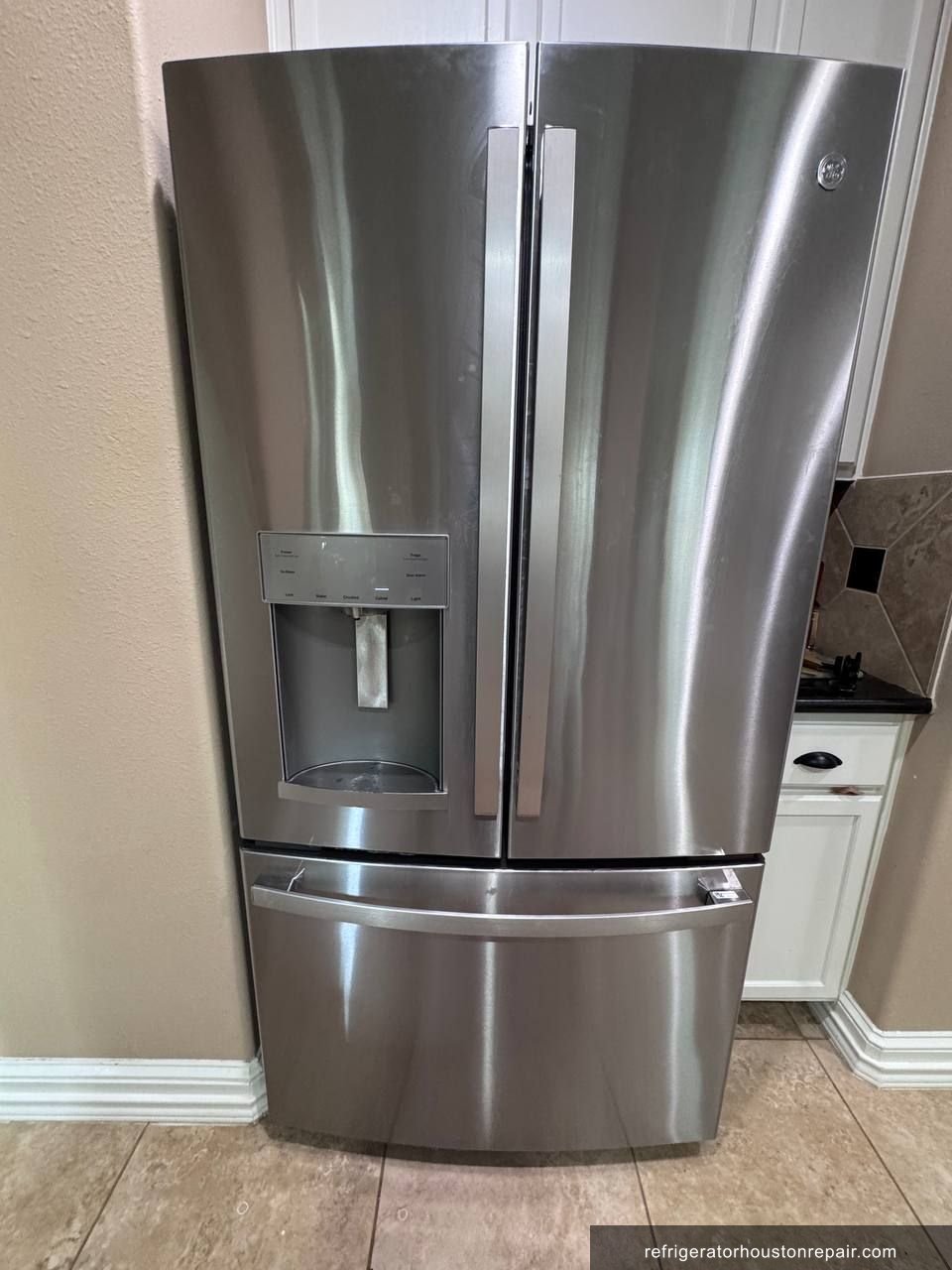
The Problem
- •Dispenser completely unresponsive — no water, no ice dispensed
- •Ice maker stopped producing ice entirely
- •Door board WR55X44126 appeared to receive power at rest but failed under any load
- •Voltage at door board dropped from 13.6V to 2.5-3.3V the moment a function was triggered
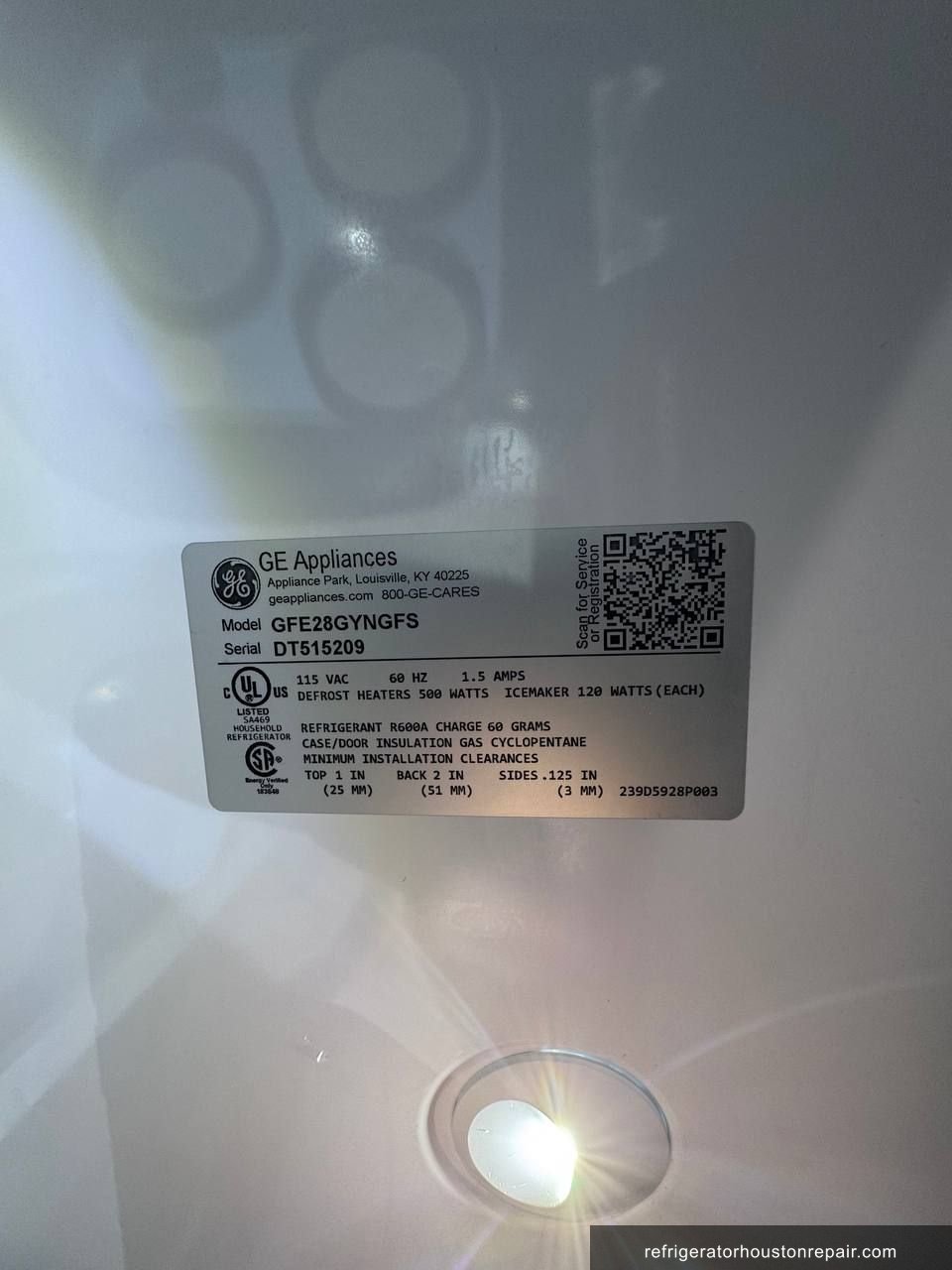
🔍 Diagnosis
This case is a continuation of a previous repair documented at refrigeratorhoustonrepair.com/repair-cases/ge-gfe28gyngfs-dispenser-icemaker-door-board-houston. The customer called back and agreed to order the replacement door board WR55X44126. I installed the new board and ran into the exact same failure pattern I had seen on the original board. With my multimeter probes on the door board power input, I read 13.6V at rest. The moment I triggered any dispenser function, the voltage collapsed to between 2.5V and 3.3V. That reading was identical to what the failed original board had shown, which told me immediately the board was not the root cause. The main control board was outputting a steady 13.6V with no drop on that side, so the fault had to be somewhere in the wiring path between the two boards. After roughly 1.5 hours of systematic tracing, I made the decision to pull the cover off the door hinge and inspect the wiring connector inside. When I manipulated the connector by hand, the dispenser activated. The connector had oxidized internally. At rest, with no current flowing, the oxidized contact maintained just enough continuity to pass voltage. The moment current draw increased under load, resistance at the corroded contact spiked and the voltage collapsed. This is a known failure point on GE French door models where the wiring passes through the top hinge assembly. Moisture from the freezer compartment works into that connector over time.
🔧 The Repair
- ✓Step 1: Installed replacement door board WR55X44126 and confirmed the voltage drop symptom reproduced identically, eliminating the board as root cause.
- ✓Step 2: Placed multimeter leads on main control board output terminals and confirmed stable 13.6V with no drop under load, confirming main board was functioning correctly.
- ✓Step 3: Traced the wiring harness from the main board toward the door, checking for pinched sections along the left French door path.
- ✓Step 4: Removed the plastic cover from the top door hinge assembly to access the wiring connector routed through the hinge pivot area.
- ✓Step 5: Manipulated the hinge connector by hand and observed the dispenser activate in one specific position, confirming intermittent contact caused by oxidation.
- ✓Step 6: Disconnected the hinge connector and inspected the terminals under direct light. Found heavy oxidation on the mating contacts inside the connector body.
- ✓Step 7: Cleaned the connector terminals using electrical contact cleaner and a fine pick to remove oxidation deposits. Applied dielectric grease to all contacts to prevent future moisture intrusion.
- ✓Step 8: Reconnected the hinge connector, reinstalled the hinge cover, and verified voltage at the door board held steady at 13.5V under full dispenser load. Confirmed ice maker cycling normally and dispenser dispensing water and ice without interruption after 30-minute observation.
✓ Result
After cleaning the oxidized hinge connector and sealing it with dielectric grease, the dispenser and ice maker both came back to life immediately. Voltage at the door board stabilized at 13.5V under load, which is exactly where it needs to be. The repair was completed in the Katy area, ZIP 77494. The customer had been patient through two visits and a board replacement that turned out to be unnecessary, and when everything finally worked, his reaction was genuine relief. He said he had been ready to give up on the refrigerator. The actual fix cost a fraction of what he expected.
💡 Technician Notes
On GE French door models like the GFE28GYNGFS, the wiring harness that feeds the door board runs through the top hinge assembly. That connector sits close enough to the freezer compartment that condensation works into it over years of use. The early warning sign is intermittent dispenser behavior, where the dispenser works sometimes and not others depending on door position or temperature. If you own this model and your dispenser has started acting up only occasionally, do not assume the door board is bad without testing voltage under load first. A board that reads correct voltage at rest but collapses under load is almost always a wiring or connector problem upstream. Replacing the board without confirming the upstream voltage is stable wastes money. Check the hinge connector first. If you see any corrosion on those terminals, clean and seal them before ordering any parts.
Frequently Asked Questions
GE GFE28GYNGFS dispenser not working after replacing door board — what else could it be?
If you replaced the door board WR55X44126 on your GE GFE28GYNGFS and the dispenser still does not work, check the voltage under load at the board input. If voltage drops from around 13.6V down to 2-3V when you press the dispenser, the board is not the issue. The wiring connector inside the top door hinge is the first place to inspect on this model.
How much does it cost to fix a GE French door dispenser that keeps losing power in Houston?
In the Houston area, diagnosing and repairing a dispenser power loss on a GE GFE28GYNGFS typically runs between 150 and 300 dollars depending on what is found. If the fix is a connector cleaning with no new parts, the cost stays on the lower end. If a door board replacement is also needed, parts alone add another 80 to 120 dollars on top of labor.
What happens if I ignore a corroded door hinge connector on my GE refrigerator?
Leaving an oxidized hinge connector on the GE GFE28GYNGFS will eventually result in complete dispenser and ice maker failure. Over time, the oxidation worsens and the contact degrades from intermittent to none. There is also a small risk of localized heat buildup at the corroded contact under repeated load cycles, which is worth taking seriously.
Is it worth repairing a GE GFE28GYNGFS dispenser issue or should I replace the refrigerator?
A dispenser or ice maker failure caused by a wiring connector on the GE GFE28GYNGFS is one of the most cost-effective repairs on this model. The refrigerator itself is a 28 cubic foot French door unit that, when the sealed system is intact, has years of life left. Unless there is a compressor or sealed system failure, repair is the right call on this model.
Why did my GE GFE28GYNGFS show correct voltage at rest but the dispenser still would not work?
This is a classic symptom of high resistance in a wiring connector. At rest, with no current flowing, even a corroded contact passes enough electrons to show a normal voltage reading on a multimeter. The moment the dispenser draws current, resistance in the oxidized connector spikes and the voltage collapses. You have to test voltage under load, not just at rest, to catch this failure.
Repair Summary
- Brand
- GE Appliances
- Model
- GFE28GYNGFS
- Repair Type
- Door Hinge Wiring Connector Cleaning and Restoration
- Refrigerant
- R-600a
- Root Cause
- Oxidized door hinge connector causing voltage drop under load
- Parts Replaced
- ✓Door dispenser control board WR55X44126 (GE OEM replacement, installed during this visit)
- ✓Electrical contact cleaner and dielectric grease applied to hinge wiring connector terminals
- Location
- Houston, TX 77494
- Status
- ✓ Completed
Service Area
We provide refrigerator repair service in Houston and surrounding areas.
View Houston Service Area →Need GE Appliances Refrigerator Repair in Houston?
We serve Houston and all surrounding Houston areas. Same-day service available.