Sub-Zero Repair — Houston, TX
Sub-Zero Refrigerator Not Cooling in Both Compartments: What a Houston Tech Finds Every Time
By John Smith — Refrigeration Technician·Serving Houston, Katy, Sugar Land, Cypress, Memorial, Spring, Richmond, Fulshear
Published: July 1, 2026 · 10 min read
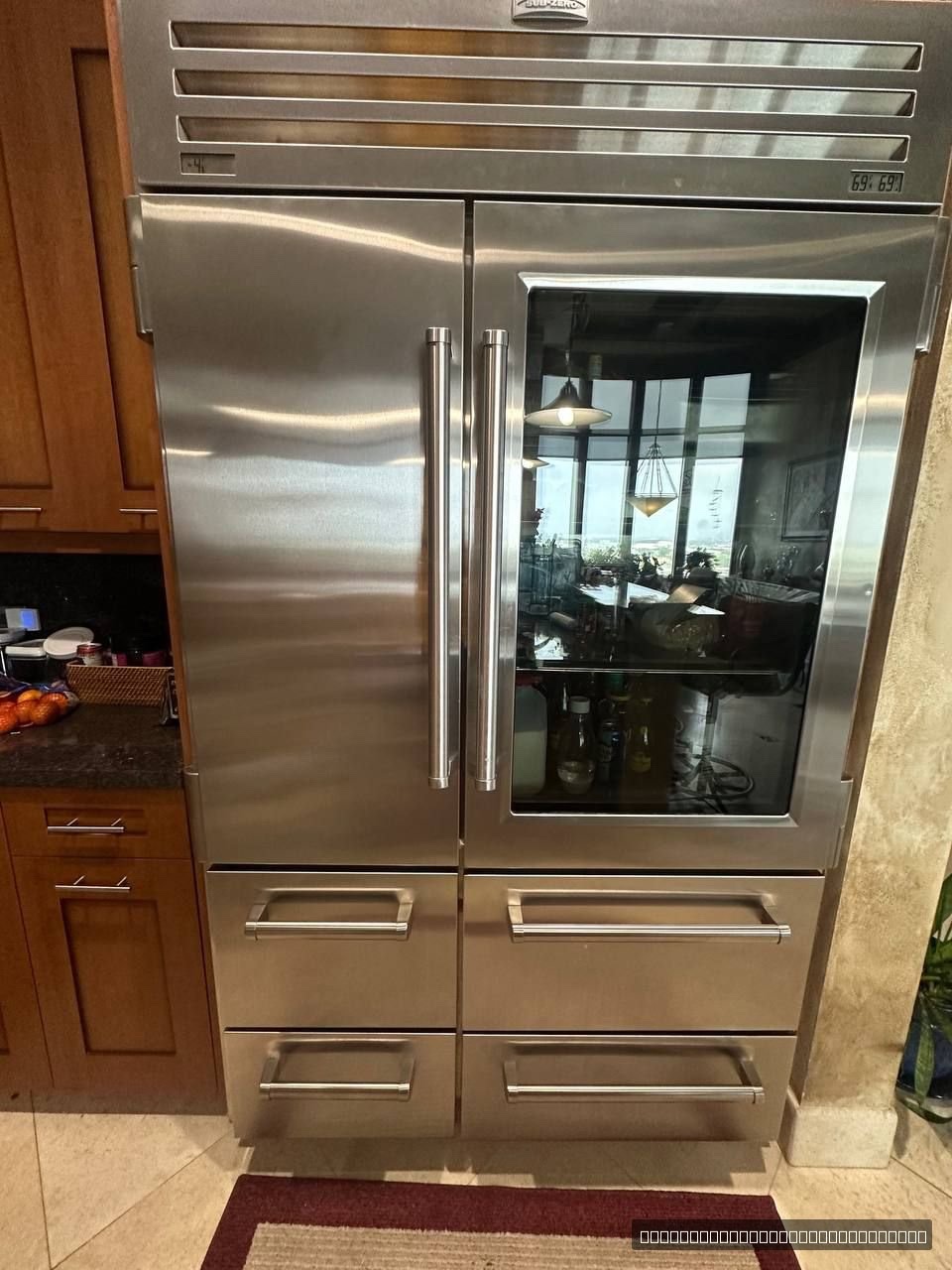
My name is John Smith, and I repair Sub-Zero refrigerators across Houston, Katy, Sugar Land, Cypress, Memorial, Spring, Richmond, and Fulshear. When a homeowner calls me and says both the fresh food section and the freezer are warm, I already have a short list of suspects in my head before I even open the door. Sub-Zero builds a refrigerator unlike anything else on the market. The dual evaporator system sets it apart from standard brands. That same system, however, creates specific failure points I see repeatedly. This article walks you through exactly what I find, what I do to fix it, and what it costs.
Why Both Compartments Lose Cooling at the Same Time
Most refrigerators use one evaporator coil to cool the entire cabinet. Sub-Zero uses two separate evaporators, one dedicated to the freezer and one dedicated to the fresh food section. This design keeps humidity levels and temperatures more precise in each compartment. When both sections go warm at the same time, the failure is almost always upstream of both evaporators. The refrigerant circuit, the compressor, or a shared control component has failed. If only one section were warm, I would look at that section's evaporator or fan first. Both sections warm simultaneously tells me to think bigger. I start my diagnosis at the compressor and the sealed system before I pull any panels.
The Most Common Cause: A Frozen Evaporator Coil
This is the single most frequent problem I find when I arrive at a Houston home with a Sub-Zero that stopped cooling. The evaporator coil ices over completely. When that happens, air cannot move across the coil surface. No air movement means no heat transfer. No heat transfer means the refrigerant cannot do its job. Both compartments climb toward room temperature while the compressor keeps running and working harder than it should. Houston's humidity makes this problem worse than in drier climates. Warm, moist air sneaks into the cabinet every time you open the door. That moisture hits the cold evaporator and freezes. Over time, the defrost system cannot keep up. Ice builds up layer by layer until the coil is buried. I pull the back panel inside the freezer section and I can see immediately whether the coil is solid ice. When it is, I do a controlled manual defrost, clear the ice, and test every component in the defrost circuit. The defrost heater, the defrost thermostat, and the defrost timer or control board all need to check out. If I replace only the ice without fixing the root defrost failure, the coil will freeze again within days. I fix the cause, not just the symptom.
The Second Most Common Cause: A Failed Evaporator Fan Motor
Sub-Zero uses separate evaporator fan motors for each evaporator. These motors pull air across the coil and push it into the cabinet. When a fan motor fails, the coil gets cold but the cold air never reaches the food. The compartment warms up even though the refrigerant system is working perfectly. I test the fan motors every time. A failed motor is obvious when I manually spin the blade and it wobbles, or when I apply power directly to the motor and nothing happens. Sometimes the motor runs but runs weakly and cannot move enough air. I replace the motor with a genuine Sub-Zero part. After the replacement, I check airflow at the vents inside the cabinet to confirm the new motor is performing correctly. In some cases both fan motors fail around the same time, especially on units that are eight to twelve years old. Age and continuous use wear them out. If I replace one and the other tests on the edge of failure, I recommend doing both while I have the unit open. That saves the homeowner a second service call in the near future.
Older Sub-Zero Units and Compressor Failures
Sub-Zero refrigerators that are ten years old or older face a different problem. The compressor. I see compressor failures regularly on units in this age range, especially here in Houston where these appliances run hard year-round against our summer heat. The compressor is the heart of the refrigerant system. It pressurizes the refrigerant and pushes it through the condenser and evaporator coils. When the compressor fails, refrigerant stops circulating. Both compartments warm up completely. The unit may still power on. Lights work. Controls respond. But no cooling happens at all because the refrigerant is not moving. I test the compressor with a clamp meter to check amp draw and with a multimeter to check the windings. A compressor that draws too many amps is overheating and failing. A compressor with open or shorted windings is already dead. Compressor replacement on a Sub-Zero is a major repair. The labor is significant because the sealed system must be opened, evacuated, and recharged with refrigerant. I hold EPA Section 608 certification to handle refrigerants legally and safely. On a unit ten years old or older, I always have an honest conversation with the homeowner about the age of the appliance versus the cost of the repair. Sub-Zero builds refrigerators that last twenty to thirty years with proper maintenance. A compressor replacement on a twelve year old Sub-Zero can still make financial sense because the unit may have fifteen more years of life ahead of it. That decision belongs to the homeowner, and I give them the information they need to make it.
How the Sub-Zero Dual Evaporator System Changes the Diagnosis
Because Sub-Zero separates the evaporator coils, my diagnostic process is different than it would be on a standard single-evaporator refrigerator. I check each evaporator circuit independently. I measure temperatures at each coil with my digital thermometer. I check refrigerant pressures at the service ports specific to the Sub-Zero sealed system. I verify that each expansion device is functioning and not restricted. A restriction in the refrigerant line feeding one evaporator can starve that coil of refrigerant and cause uneven cooling or total failure in one or both sections. The dual system also means there are two sets of fan motors, two sets of defrost heaters, and two temperature sensors. I test every component before I make my repair recommendation. I do not guess. Guessing costs the homeowner money and wastes time. Sub-Zero refrigerators deserve a thorough diagnosis, and I give every unit I work on exactly that.
What Homeowners in Houston Should Know Before Calling
Before I arrive, there are a few things you can do. First, check that the condenser coils are not clogged with dust. Sub-Zero condenser coils sit at the top of the unit behind a grille. Clogged condensers cause high head pressure, overheating, and cooling failure. You can vacuum the coils carefully with a brush attachment. Second, check that nothing is blocking the interior vents. Overpacking the refrigerator restricts airflow and can mimic a mechanical failure. Third, do not leave the doors open for extended periods. Houston summers push ambient temperatures high, and every minute the door is open adds moisture and heat load to the system. These steps will not fix a mechanical failure, but they help me rule out simple causes quickly during my diagnosis. They also extend the life of your Sub-Zero between service visits. I serve homeowners throughout Houston, Katy, Sugar Land, Cypress, Memorial, Spring, Richmond, and Fulshear, and the best-maintained units I see belong to homeowners who do these simple checks regularly.
The Repair Process From My First Look to Final Testing
When I arrive at your home, I start with the $89 diagnostic. I power the unit down, pull the interior panels, and begin systematic testing. I check temperatures, measure electrical components, inspect the sealed system, and photograph what I find. I explain my findings clearly before I touch anything else. You approve the repair before I begin. Once I have your approval, I complete the repair in most cases the same day. I carry common Sub-Zero parts in my service vehicle, including fan motors, defrost heaters, thermostats, and control boards. If a compressor or sealed system component is needed, I order it directly from Sub-Zero and schedule a return appointment. After the repair, I power the unit up and monitor temperatures through a full cooling cycle. I do not leave until the refrigerator is holding the correct temperature in both compartments. Sub-Zero specifies 38 degrees Fahrenheit for the fresh food section and 0 degrees Fahrenheit for the freezer. I confirm both before I close my toolbox.
Repair Costs for Sub-Zero Cooling Failures
Sub-Zero repairs cost more than repairs on standard refrigerators. The parts are engineered to tighter tolerances and carry higher prices. The labor is more involved because the dual evaporator system requires more time to access and test properly. My diagnostic fee is $89 and applies toward the cost of the repair when you approve the work. For most Sub-Zero cooling failures in Houston, homeowners should budget between $800 and $1,200 for the complete repair. This range covers parts and labor for the most common failures I described above. Compressor replacements and sealed system work sit at the higher end of that range. Evaporator fan motor replacements and defrost system repairs sit lower. I provide a written estimate before any work begins. No surprises.
Repair Costs in Houston
| Problem | Repair Cost (parts + labor) |
|---|---|
| Diagnostic fee | $89 |
| Defrost heater replacement | $180-$320 |
| Evaporator fan motor replacement (one) | $220-$380 |
| Evaporator fan motor replacement (both) | $340-$520 |
| Defrost thermostat or timer replacement | $120-$250 |
| Control board replacement | $280-$587 |
| Compressor replacement and sealed system recharge | $700-$1,200 |
| Full dual evaporator service and defrost repair | $400-$750 |
Diagnostic fee: $89, applied toward any repair.
Areas We Serve
Not cooling? Call today.
Same-day service available. $89 diagnostic applied toward any repair.
Call (346) 512-3688Frequently Asked Questions
Why are both my Sub-Zero freezer and refrigerator sections warm at the same time?
When both compartments lose cooling simultaneously, the problem is usually upstream of both evaporators. The most common causes are a completely frozen evaporator coil blocking airflow, a failed compressor, or a refrigerant restriction in the sealed system. A failed evaporator fan motor can cause one section to warm, but when both go warm together, I focus my diagnosis on the shared components of the refrigerant circuit first.
How much does it cost to repair a Sub-Zero refrigerator that is not cooling?
Most Sub-Zero cooling repairs in Houston run between $800 and $1,200 for parts and labor combined. The diagnostic fee is $89 and applies toward the repair. Simpler repairs like defrost component replacement sit lower in that range. Compressor replacement and sealed system work sit at the higher end. I provide a written estimate before starting any repair.
Is it worth repairing a Sub-Zero refrigerator that is 10 or 15 years old?
Sub-Zero builds refrigerators to last twenty to thirty years. A unit that is ten to fifteen years old often has significant life remaining. I have an honest conversation with every homeowner about repair cost versus remaining appliance life. In many cases, repairing a fifteen-year-old Sub-Zero makes financial sense compared to replacing it with a new unit at current prices. I give you the information and the decision is yours.
What is a dual evaporator system and why does Sub-Zero use it?
Sub-Zero uses two separate evaporator coils, one for the fresh food compartment and one for the freezer. This allows each compartment to maintain independent temperature and humidity levels. The fresh food section stays more humid to preserve produce, while the freezer stays dry to prevent freezer burn. This design provides better food preservation but also means there are two sets of fans, heaters, and sensors that can fail.
Can I defrost a frozen Sub-Zero evaporator coil myself?
You can manually defrost the coil by unplugging the unit and leaving the doors open for 24 to 48 hours with towels on the floor to catch the meltwater. This will temporarily restore cooling. However, if the defrost system has a failed component, the coil will freeze solid again within a few days. A manual defrost without diagnosing and fixing the root cause is a temporary fix. You need a technician to test the defrost heater, thermostat, and control board to find and fix what caused the freeze-up.
How do I know if my Sub-Zero compressor has failed?
Signs of a failed compressor include both compartments going completely warm while the unit still powers on normally, the compressor running constantly without cooling the cabinet, loud clicking or humming sounds at the back of the unit, or the compressor not running at all. A technician needs to test amp draw and motor windings with a meter to confirm compressor failure. These tests require professional equipment and EPA certification to handle the refrigerant in the sealed system.